


Catering Marketing Agency Built to Grow Your Business
Nobody books a caterer casually. A couple planning a wedding starts searching long before the date, builds a shortlist, and reads every review twice. An office manager who needs lunch for the whole floor on Thursday wants a menu, a price, and a reply today. Both land on the same website, and both decide largely on what they see: real photos of real events, recent reviews, and how fast someone answers the quote form. The tasting closes the deal, but only if you get invited to one. Good catering marketing is about winning that shortlist spot on both timelines at once. Here is how we approach it.
More Events. Less Chaos.
Catering businesses live and die by their pipeline — and most are leaving serious revenue on the table because leads go cold before anyone follows up. Qeystone builds AI-powered systems that qualify event inquiries, send proposals, and re-engage past clients automatically. While you focus on the food, we keep your calendar full.
How We Grow Catering With Catering SEO Services
AI Agents & Voice AI
24/7 AI agents that answer, qualify, and book jobs by chat and phone.
SEO & GEO
Rank in Google and get cited by AI search across your service area.
Digital Advertising
Profitable paid campaigns on Google, Meta, and beyond.
Website Design
Fast, modern sites built to turn visitors into customers.
AI Automation & Workflows
Automate the busywork so your team can focus on revenue.
Reputation Management
Earn more 5-star reviews and protect your brand on autopilot.
Content & Social Media
On-brand content that keeps you top of mind, posted for you.
Lead Generation
A predictable pipeline of qualified, ready-to-buy leads.
How People Actually Choose a Caterer
A booking rarely starts with a phone call. It starts with a search — a venue name plus a food style, a neighborhood plus “catering,” or a friend's recommendation verified on Google before anyone reaches out. By the time an inquiry lands in your inbox, the planner has compared you against a handful of others and decided you look credible enough to ask. Everything before that moment is where catering marketing works.
The quote request form is the real first impression, and most caterers lose there. A planner sending the same details to several shops takes the first useful reply seriously and treats the rest as backup. Useful means a human name, a rough direction on menu and service style, and one question showing you read what they wrote. An acknowledgment buys a little time; silence over a weekend hands the event to whoever answered.
Weddings and Corporate Accounts Are Two Different Businesses
A wedding is a single, high-stakes sale researched for months by people who will never buy again. A corporate account is a small, repeated order from someone who wants the decision off their plate permanently. The searches differ, the objections differ, and the closing language differs. Treating both with one generic page and one generic ad means speaking vaguely to everyone, and losing the corporate buyer who wanted a standing order and an invoice.
So we split them. Wedding pages lead with galleries, venue names, and tasting details, and the follow-up stretches across the long gap between inquiry and contract. Corporate catering pages lead with lead times, delivery windows, dietary labeling, and billing terms, and the follow-up is short because the decision is. Ads split the same way, since a wedding click and a Tuesday drop-off click are worth different amounts and should never share a budget.
Food Photography Is the Asset That Decides It
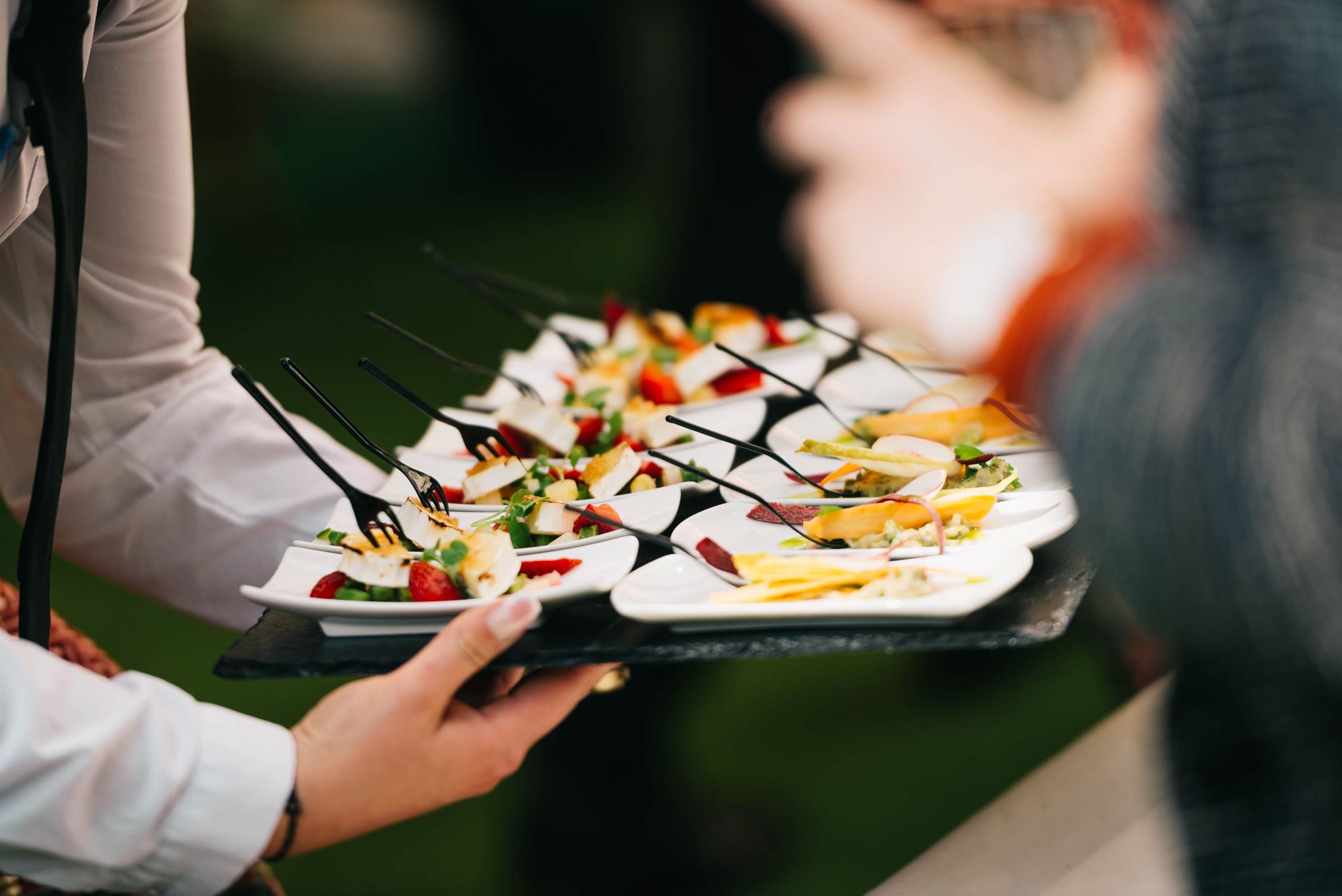
Menus persuade almost nobody. Photographs do. A planner scrolling your site wants evidence that food arrives looking like it did in your portfolio, that the buffet setup suits their room, and that your team looks composed on a busy floor. Stock imagery is spotted instantly and quietly disqualifies you. Real photos from real events, shot at the venues you actually work in, do more for a catering business than any amount of copy.
The practical version is unglamorous. Photos get named and captioned so search engines can read them, sorted into galleries by event type rather than one grid, and pushed to your Google Business Profile where they surface beside the map listing. One of the more reliable catering marketing ideas is asking the venue coordinator to share their photographer's images, so you get polished coverage of your own work without hiring a crew.
Venue Preferred-Vendor Lists Are a Channel, Not a Favor
Most venues keep a short list of caterers handed to every couple who tours the space. Being on it means a steady flow of pre-qualified inquiries from people already committed to a date and a room. Getting on it is not a marketing trick — it comes from clean load-ins, staff who follow house rules, and a coordinator who never has to apologize for you. But it is a channel, and deserves managing like one.
Managed means knowing which venues actually send catering work your way and which just list your name. We tag inquiries by source so the pattern is visible, build a page for each venue you work in regularly — its layout, its kitchen limits, the menus that suit that room — and keep coordinators supplied with current photos and menus instead of a stale PDF from an older menu. Those venue pages rank, too.
Turning an Inquiry Into a Tasting
The tasting is where catering is actually sold, so every step before it exists to earn one. That means answering the questions that stall a decision before they are asked: how allergens are handled, whether vegan, halal, kosher, and gluten-free options are genuinely prepared or just labeled, what staffing looks like, and what happens if the guest count moves. A planner who finds those answers arrives already leaning your way.
Between inquiry and tasting sits the part most kitchens have no time for. An AI agent can answer routine questions at midnight, confirm the date is open, and put a tasting slot on the calendar without anyone stepping off the line. Inquiries that go quiet get a nudge on a schedule, not whenever someone remembers. Past clients hear from you before their event's anniversary, when repeat catering work is easiest to win.
Building a Catering Marketing Plan Around the Calendar
Demand in this business is not flat. Holiday party inquiries land while it is still warm out, wedding season fills up over the winter before it, and graduation and corporate retreat work cluster in their own windows. A catering marketing plan that ignores that rhythm spends money advertising dates already booked and goes quiet when planners are actually deciding. The calendar gets built backward from event dates, not forward from budget cycles.
That lag also changes how results get read. Money spent during a booking window shows up as revenue a season later, so judging a campaign by the same month's deposits makes good work look broken. We track inquiries, tastings booked, and signed contracts by the date of the event rather than the date of the click, the only honest way to see whether a season's push filled the calendar it targeted.
Common Questions About Catering Marketing
Owners ask three things before starting. How long until it works? Early inquiries usually arrive long before the revenue does, because catering books ahead and the work you do now fills dates that are still seasons away. Do we need new photos and a redesigned menu first? We start with the photos, menus, and reviews you already have, then strengthen the weakest assets while the program runs. Will it hold up across different event types and venues? The same system splits into separate pages, campaigns, and follow-up tracks for weddings, corporate accounts, and every venue that sends you referrals. None of it depends on changing how you cook or staff an event. It depends on the inquiry reaching a person quickly, and the answer arriving while the planner is still deciding.
Ready to grow your catering business? Qeystone builds and runs the whole system — website, search, ads, AI agents, reviews, and follow-up — so your catering marketing keeps working through every season. Let's talk.
Ready to Fill Your Event Calendar?
Peak season books fast — get your AI system running before your competitors do.

Let's talk about your growth
Tell us about your business and we'll show you exactly where AI can win you more customers.