


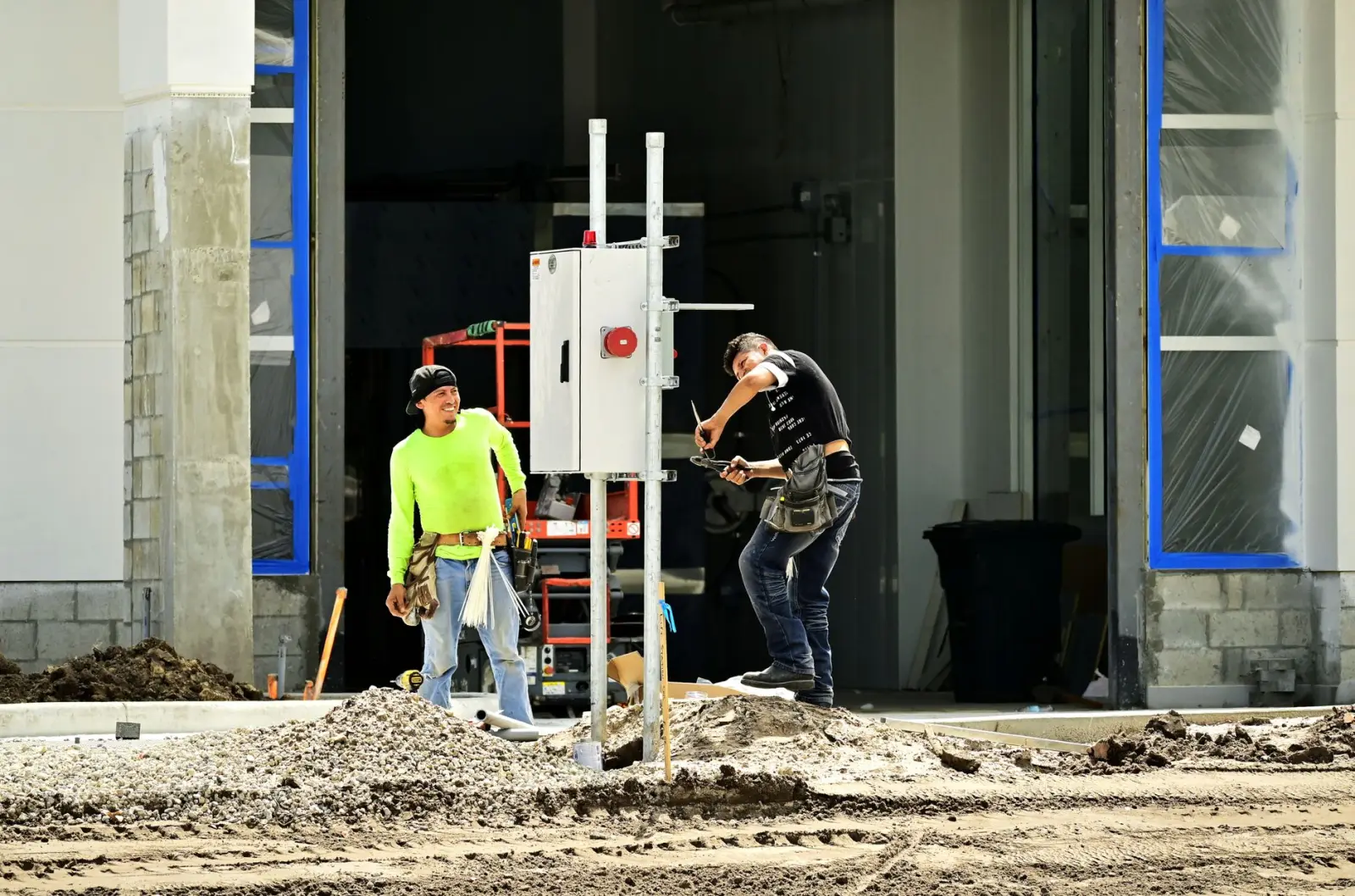
Commercial Electrical Content Marketing for GCs and Facility Teams
Commercial electrical content marketing for contractors who win work from general contractors, facility managers and building owners. We turn your closed-out tenant improvements, retrofits and service upgrades into project write-ups, jobsite videos, LinkedIn posts and newsletters, written from interviews with your project managers and foremen, so the buyers checking you out before a bid see how your crews actually run a job.
Commercial Electrical Content Marketing for the People Who Award the Work
Commercial electrical content marketing is written for a reader who will never call at midnight about a dead outlet. It is the estimator at a general contractor deciding which electrical subs get the next bid invitation, the facility manager who has to explain a lighting retrofit to an owner, and the building owner weighing a service upgrade before a new tenant moves in. None of them hire on impulse. They check out a sub quietly, often weeks before anyone picks up the phone, and they judge the firm by what it has published about the work it actually does.
For commercial electrical contractors doing tenant improvements, service upgrades, retrofits and maintenance work, we produce the articles, project write-ups, videos, posts and newsletters those buyers read while they decide. Every piece is drawn from jobs your crews have already run, and every piece is written for one of three readers: the GC, the facility manager or the owner.
Content for General Contractors Building a Sub List
A GC choosing an electrical sub is mostly asking one question: will this firm hold my schedule without becoming my problem. Content for general contractors answers that question with how the firm runs a job, not with adjectives. How the crew sequences rough-in so the ceiling and wall trades are never left waiting. How the office handles submittals and closeout paperwork. How a change order gets raised early, in writing, instead of at the end. How the foreman works nights in an occupied building so the tenant next door never loses a business day.
These pieces are short and practical, the kind an estimator skims before a pre-bid meeting. We write them from interviews with your project managers and foremen, because they are the people a GC will actually deal with, and their phrasing reads as someone who has stood on a slab at seven in the morning with the schedule in hand. Nothing here pretends to be a capabilities brochure. It is a plain account of how your firm works, which is what a GC is checking for.
A Commercial Electrician Blog for Facility Managers and Building Owners
The commercial electrician blog serves a different reader: the person responsible for the building rather than the project. Facility managers and owners research before they budget, and they want plain explanations of decisions they do not make often. How a lighting retrofit gets scheduled floor by floor so an office keeps working. What to gather before a walkthrough for a service upgrade, such as the equipment list a new tenant plans to bring in. How a planned shutdown is arranged with tenants so nobody's servers or freezers are caught by surprise. What to ask before signing a maintenance contract, and what a regular visit is meant to catch.
Articles about cost explain what moves the number, like after-hours work, access, the age of the existing gear and how much of the building has to stay live, without quoting figures that would be out of date by the next budget season. Where a post touches a warning sign a facility manager might notice, such as a buzzing panel or lights that dim when equipment starts, it stays at what to report. It says plainly that a burning smell, sparking or smoke means calling the contractor's emergency line right away, and 911 when there is fire or injury. Code and permitting come up only to say that they vary by city and that your team handles them. A senior electrician or estimator on your staff reads every post before it goes live.
Commercial Electrical Project Write-Ups From Closed-Out Jobs
Commercial electrical project write-ups are the pieces a GC forwards to a colleague, because they show the firm's judgment on a real building. Each one follows the same shape: the space and what it was becoming, the constraint that made it hard, what the crew did about it, and how the job closed out. The constraint is the story. A restaurant turnover with a fixed opening date. A medical suite where the next-door practice stayed open. A warehouse lighting changeover done in sections so picking never stopped.
We build each write-up from the project manager's notes, a short interview and the photos the crew took along the way. Client and GC names appear only with their written permission. When a client prefers to stay unnamed, the write-up describes the building type and the problem instead, which is usually what a reader wants anyway. We never invent a project, and we never round a messy job into a tidy one.
Commercial Electrical Project Videos Shot on Jobs Already Running
Most commercial electrical work disappears behind ceiling tile and cover plates, so video is how a buyer ever sees it. Commercial electrical project videos come from footage the crew captures on jobs already on the schedule: neat conduit runs before the ceiling closes, a gear room laid out and labeled, a dark retail floor relit overnight, the foreman walking a new tenant space at closeout. A longer walkthrough, narrated by the project manager, goes into a pre-qualification email or sits on the project page.
We write the scripts around the footage after the fact, so nobody holds up the crew to stage a shot. Before anything is filmed, the GC or owner signs off on what can be shown. Tenant names, screens, security panels and access points stay out of frame, because a building owner deciding whether to hire you will notice if a past client's building was not treated with care.
Social Posts and Newsletters for a Long Award Cycle
Commercial work is awarded slowly, and the firm that stays visible between projects is the firm that gets the next call. Social posts lead with LinkedIn, where estimators, project managers and property teams look each other up, and they carry the same material as the rest of the program: a write-up summary, a clip from a closeout, a foreman explaining why a run was routed the way it was. A Facebook page stays current if the firm already keeps one. The tone is one tradesperson talking to another, never a promotion.
The newsletter goes to contacts your firm already has, in separate editions. GCs get recent project write-ups and the occasional note on how your crews handle a common sticking point. Facility managers and owners get pieces timed to how they plan: retrofit planning before budget requests are written, shutdown scheduling ahead of holiday closures, maintenance reminders tied to their own buildings.
An Editorial Calendar Set by Bid Season and Budget Season
The commercial calendar has two clocks. One is when GCs in your market are pricing work and picking subs, which differs by region and project type. The other is when facility managers and owners write next year's capital requests. Content aimed at each reader has to be live before its clock starts, so the editorial calendar is planned backward from those windows rather than forward from whenever a draft happens to be ready.
Interviews and filming are scheduled in the stretches when your project managers have room to talk, and a short reserve of undated write-ups and explainers waits for the weeks the whole office is buried in bids. Our writers start from the list of questions that the specialists tracking facility searches hand over.
Frequently Asked Questions
Should a commercial electrical contractor publish homeowner electrical tips?
No. Homeowner tips draw readers who will never award commercial work, and they tell a general contractor the firm is unsure who its customer is. The library should speak to GCs, facility managers and building owners about tenant improvements, retrofits, service upgrades and maintenance.
Can a commercial electrician publish a project write-up when the general contractor owns the client relationship?
Yes, with permission. Ask the GC and, where possible, the owner before naming the project or showing the building. If either prefers to stay anonymous, describe the building type, the constraint and how the crew solved it, which is the part a reader cares about most.
Who should be on camera in commercial electrical project videos?
The project manager or foreman who ran the job, because that is who a general contractor or facility manager will deal with on the next one. Save the owner for the longer piece on hiring, safety culture and why the firm takes the jobs it takes.
From the Closeout Walk to the Bid Invitation

We Interview the People Who Ran the Job
We sit down with your project managers and foremen on recently closed jobs, gather their notes and crew photos, and agree which projects can be named, which stay anonymous, and what the GC or owner has approved for publishing.

We Write and Script for Each Buyer
We turn those jobs into project write-ups for GCs, blog posts for facility managers and owners, and video scripts around the footage your crew already shot. Your senior electrician or chief estimator signs off on each draft before publishing.

We Publish Ahead of Bid and Budget Season
We schedule pieces to go live before GCs in your market start pricing work and before facility teams write capital requests, post to LinkedIn, and send separate newsletter editions to the contractors and building contacts you already have.
What Gets Built From Your Closed-Out Jobs
Job write-ups
Constraint-first project stories a GC can forward to a colleague
Closeout clips
Narrated walkthroughs from footage shot on jobs already running
Two editions
Separate newsletters for general contractors and facility teams
Show GCs How Your Crews Run a Job
Book a call and we'll pick the first closed-out project worth writing up, the footage worth narrating, and the article your facility contacts need before budget season.

Let's talk about your growth
Tell us about your business and we'll show you exactly where AI can win you more customers.