


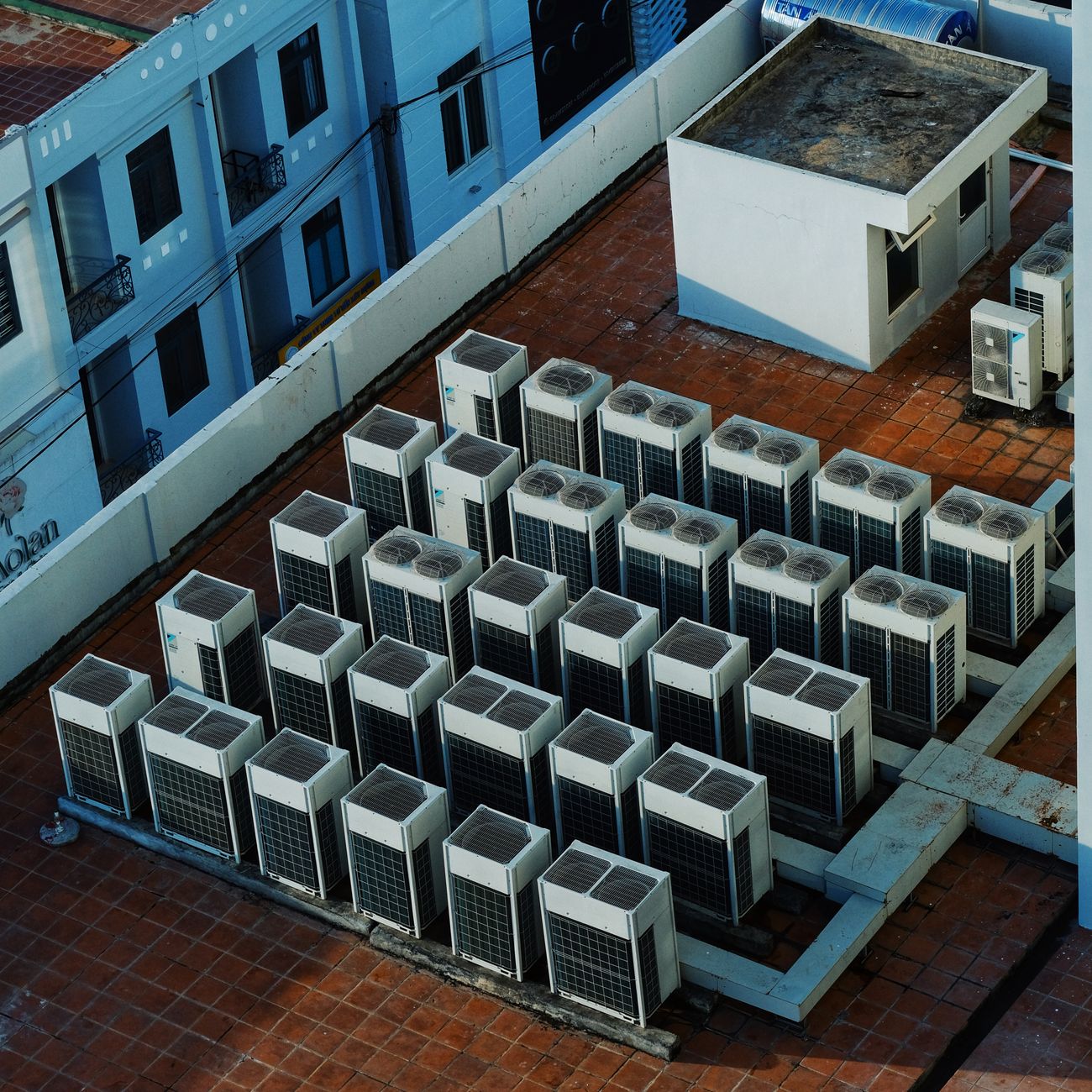
Automation for Commercial HVAC Contractors Whose Real Product Is a Renewing Contract, Not a Finished Job
AI Automation for Commercial HVAC Companies is what Qeystone does best, helping commercial HVAC businesses grow every month. Searching for commercial HVAC workflow automation? Qeystone has you covered. Stop losing revenue to manual dispatching, missed follow-ups, and service agreements that slip through the cracks. Our Commercial HVAC ai automation & workflows connect your field ops, sales pipeline, and customer communication into one intelligent system that runs around the clock. From Commercial HVAC Business Automation to Automated Workflows for Commercial HVAC Companies, we cover every angle.
The Contract Is the Product, and the System Exists to Keep It Renewed
Most trades that hire an agency are in the business of winning a discrete job and moving on — a changeout, a diagnostic, a driveway. A commercial HVAC contractor selling maintenance is not. What you actually sell a facility manager is a place in their operating budget for the next several years: a preventive maintenance contract worth $18,000 to $65,000 annually on a mid-size building, priced at $0.12 to $0.65 per square foot, that renews on their fiscal calendar and quietly compounds into a portfolio when they hand you the next building. That distinction rewrites what automation is supposed to do here. It is not a lead router waiting for someone to type "AC repair." It is the machine that produces every scheduled PM visit on time, tracks whether the reactive-versus-proactive ratio is trending the right way, surfaces a renewal before the budget for it is reallocated, and proves value to the person who signs. Commercial HVAC automation, built correctly, is measured by how many buildings are still under contract eighteen months from now, not by how many forms got filled out last week. Everything below either feeds a contract or defends one.
The Renewal Clock Runs on a Fiscal Year, Not a Heat Wave
Residential HVAC lives and dies by the thermometer — the phone rings the afternoon it hits 95 degrees. Commercial demand runs on a budget cycle. A facility manager plans HVAC spending against a fiscal year, and the decision to renew, expand, or reissue a maintenance agreement gets made in a budgeting window that has nothing to do with the weather. An agreement that lapses because no reminder fired ninety days before the fiscal close is not a missed upsell; it is a multi-year annuity dropped off the book, and reclaiming it means re-bidding against three competitors instead of quietly renewing. That is why renewal timing is one of the highest-leverage automations in this business and almost never the thing an agency builds first. The engine has to hold every agreement with its own expiration clock, start a renewal ladder well ahead of the budget deadline, tie the conversation to the numbers the building actually posted that year, and escalate when a facility manager goes quiet. Our reporting keeps that clock visible instead of buried under a lead-volume chart.
Reactive Versus Proactive Is the Argument That Renews the Agreement
The single strongest thing this contractor can automate is the evidence for its own value, because this buyer renews on arithmetic, not loyalty. The gap between a building run reactively and one run on a structured PM program averages 28 to 40 percent of the total HVAC budget, and the driver is not equipment age — it is whether preventive maintenance is scheduled or improvised. Equipment past the 15-year mark already costs 60 to 80 percent more to maintain, and every emergency dispatch stacks a 40 to 90 percent labor premium on top of a $150 to $350 trip fee against $110 to $190 hourly commercial labor. One prevented rooftop-unit failure in July can cost less than a full year of contracted maintenance. A preventive maintenance contract is therefore often cheaper than the breakdowns it replaces, but only if someone puts that comparison in front of the facility manager in a form they can take to finance. The automation that captures completed PM visits, avoided emergencies, and the proactive ratio is what converts a renewal conversation from a price negotiation into a budget defense.
The Six Workflows and the Job Each One Holds
Winning the Contract and Getting the Building Live
A commercial agreement is not closed in one session, so CRM and pipeline automation holds the real sales motion — proposal, site assessment, bid, award, renewal — as staged records carrying contract value, term length, and every stakeholder who has to sign. Lead follow-up automation nurtures a proposal-stage facility manager across a weeks-long internal approval instead of chasing a same-day close that does not exist in this trade. And once the award lands, onboarding workflow automation stands up the new building or portfolio properly — asset inventory, CMMS records, a PM calendar, and a baseline that every later report is measured against.
Running the Relationship and Proving It Was Worth Signing
Between visits, multi-channel messaging automation coordinates email, SMS, and the client portal around PM schedules and open proposals so a facility manager overseeing several buildings never has to chase you for a visit date. Reporting automation assembles the uptime, PM-completion, and reactive-versus-proactive numbers into the document that actually renews the agreement. And because a B2B book is small and relationship-based, review and reference request automation asks a handful of the right clients for a reference at a contract milestone rather than blasting for volume.
Parts Inventory Is a Margin Workflow, Not a Storeroom Chore
There is a quiet line item that separates a profitable contract from a break-even one, and it never shows up in a marketing pitch: parts. When a compressor or a control board on an aging rooftop unit fails and the contractor has not tracked inventory, the technician buys the urgent component at spot-market price, and that premium comes straight out of a fixed-fee margin the contractor already quoted. Skipping parts-inventory tracking means paying spot-market rates on exactly the components most likely to fail, which is why a reorder trigger tied to the asset list belongs in the automation stack rather than in a technician's memory. When the CMMS knows which units are past 15 years and which parts they consume, the system can flag a reorder before the failure instead of after it, and the labor-only versus full-coverage math the agreement was priced on actually holds. That is operational automation doing what marketing automation alone never could — protecting the margin on the contract the marketing won.
What's Included in Qeystone's Commercial HVAC Automation Service
Every engagement here is built on the contract and works outward from it: a CRM that carries proposals, active agreements, and renewals as distinct staged records; follow-up that nurtures a facility manager through a multi-week, multi-stakeholder approval; onboarding that inventories a new building's assets and stands up its PM calendar and CMMS baseline; messaging that runs the pre-visit, completion, and proposal loops across email, SMS, and portal; facility-manager reporting on uptime, PM completion, and the proactive ratio; parts-reorder triggers that keep urgent components off the spot market; and reference requests timed to contract milestones rather than fired at random. All of it exists so commercial HVAC automation can be judged on retained buildings rather than raw form fills. The nearest structural cousin to this work anywhere in our portfolio is the recurring-contract world of commercial painting, where a facility manager signs scheduled, multi-year building services on the same budget logic — the retention and renewal mechanics in our automation service for painting contractors are built on that shared premise, applied to a very different scope of work. For the wider view beyond automation, our commercial HVAC marketing overview maps the whole program.
Built for How HVAC Operates

Map Your Revenue Leaks
We audit your current dispatch process, service agreement renewals, quote follow-up cadence, and lead response times to identify exactly where time and money are walking out the door — before we build a single workflow.

Deploy AI-Powered Workflows
We build AI-powered ai automation & workflows for Commercial HVAC operations that handle technician scheduling, preventive maintenance reminders, service contract renewals, and after-hours lead capture — all without adding headcount.

Scale Without the Overhead
Your team focuses on installs, service calls, and client relationships while the system automatically follows up on open quotes, triggers seasonal maintenance campaigns, and routes emergency calls to the right tech in real time.
Results HVAC Operators Actually See
40%
Reduction in manual dispatch and scheduling time within 60 days
3x
Faster response to inbound service leads compared to manual follow-up
25%+
Increase in service agreement renewals driven by automated outreach
How We Grow Commercial HVAC With Commercial HVAC Workflow Automation
Lead Follow-Up Automation
Instantly follow up so no lead slips away.
Review Request Automation
Automatically ask happy customers for 5-star reviews.
CRM & Pipeline Automation
Keep every deal moving without manual data entry.
Onboarding Workflow Automation
Welcome and set up new clients on autopilot.
Reporting Automation
Automated reports delivered to your inbox on schedule.
Multi-Channel Messaging Automation
Reach customers by text, email, and chat automatically.
Ready to Automate Your HVAC Operation?
Book a free workflow audit and we'll show you exactly where AI can cut costs and close more service contracts for your Commercial HVAC business.

Let's talk about your growth
Tell us about your business and we'll show you exactly where AI can win you more customers.