


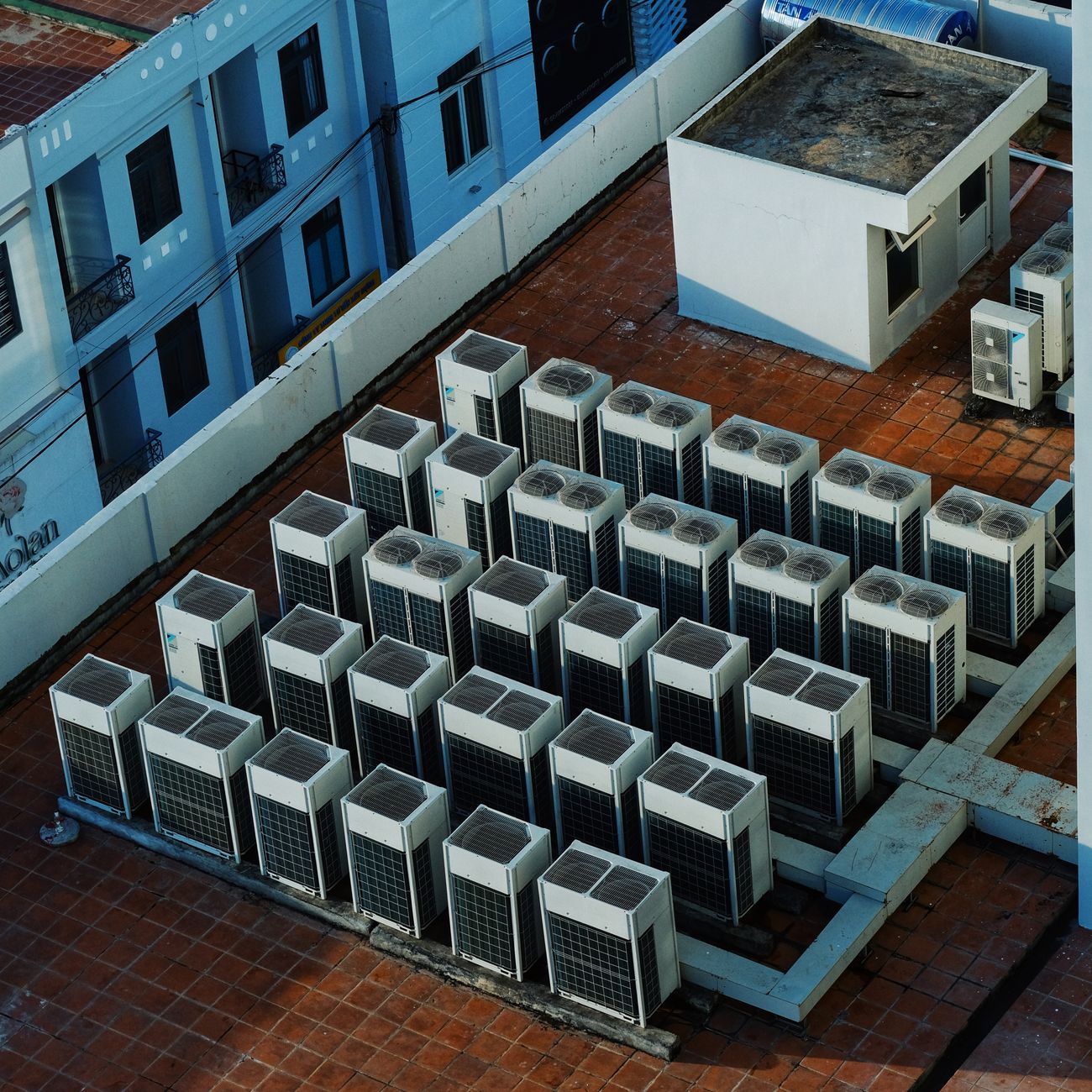
Commercial HVAC Advertising Built Around Service Agreements and Rooftop Units
Commercial HVAC advertising from Qeystone is built for the facility managers, property managers and building owners who sign maintenance agreements and approve rooftop unit replacements. We run Google Ads, Meta and YouTube with separate campaigns for service agreements, replacement work and after-hours breakdowns, pace spend to the seasons and the forecast, block homeowner searches, and track every paid call back to the search behind it.
Commercial HVAC Advertising Aimed at the Person Who Signs the Service Agreement
Commercial HVAC advertising is bought by a different reader than any ad written for a household. The person clicking is a facility manager covering a medical office park, a property manager with a strip center, or an owner whose warehouse rooftop units have been patched through another summer. That reader is not shopping for a repair today. They are deciding who gets the building: the preventive maintenance agreement, the service calls that come with it, and eventually the replacement work. Most must explain the choice upstairs before signing.
So the account is built around what each search is worth to a mechanical contractor, not around one blended cost per click. Service agreement and preventive maintenance searches get one campaign. Rooftop unit replacement and other capital work gets another. After-hours breakdowns at a business get a third, and tenant improvement work, where the buyer is often a general contractor or a landlord's project manager, gets its own if the shop wants that work. A no-cooling call from one retail tenant and a request covering a whole property portfolio should never draw on the same pot of money or land on the same page.
Commercial HVAC PPC on a Short List of Expensive Searches
Few facility managers in one metro are searching for a new mechanical contractor in any given week, and the ones who are use plain trade language: commercial HVAC service agreement, rooftop unit maintenance contract, chiller service, boiler service for an apartment building, mechanical contractor for a tenant build-out. Commercial HVAC PPC lives on that short list. With so little volume, broad match drifts toward whatever has more searches, which in this trade means homeowners, so the core campaigns run on phrase and exact match. Broad match stays in one small test campaign that only surfaces new terms.
The residential spillover has to be blocked by name. Home AC repair, furnace tune-ups, window units, technician job openings, trade school courses and equipment parts all match commercial terms loosely, and every one of those clicks is paid at a commercial bid. That exclusion list is written before launch and extended from the search terms report every week. Agreement campaigns run in business hours, when facility managers are at their desks.
Google Ads for Commercial HVAC Contractors, Each Click on a Matching Page
A property manager who searched for a maintenance contract and lands on a furnace coupon decides the shop is residential. Google Ads for commercial HVAC contractors only works when the page behind each ad speaks to the same building and the same decision. The maintenance agreement page explains how coverage is structured, what a scheduled visit includes and how each visit is documented for the owner. The rooftop unit page covers how a replacement is scoped, how a crane day is scheduled around tenants, and what the owner receives in writing.
Each page ends on the step this buyer actually takes: a building walkthrough, a proposal request, or a call. A short form asking for the building type, the equipment on the roof and how many sites the inquiry covers tells the shop whether it is talking to one tenant or a portfolio before anyone picks up the phone. Headlines and sitelinks carry the same specifics as the page.
Rooftop Unit Replacement Ads Timed to Capital Budgets
Replacement is the largest ticket most commercial HVAC contractors sell, and it is rarely decided on the first visit. An owner who has paid for compressor and fan motor repairs on the same unit in back-to-back seasons starts reading about replacement, then waits for the capital budget to open. Rooftop unit replacement ads are written for that buyer: the cost of keeping tired equipment alive against planning the swap, how the work is phased so tenants keep cooling, and what happens on the day the crane arrives. No savings figures are invented; the shop's own explanation of repair or replace carries the ad.
Many owners and property firms approve capital work on a fiscal calendar, so replacements tend to be decided in planning months rather than the week a unit fails. The replacement campaign is weighted toward those windows and toward the shoulder seasons, when installs can be scheduled without leaving a building hot or cold, with a low budget the rest of the year for the unit that quits for good.
Commercial HVAC Service Ads for the Building That Lost Cooling on a Saturday
Breakdown work at a business has its own searches and its own clock. A restaurant with a dead rooftop unit before the dinner rush, an office with no heat on a Monday morning, a server closet running warm over a holiday weekend: the person searching needs a technician on site, not a proposal. Commercial HVAC service ads for these calls are mostly call-only on phones and are scheduled to the hours the shop really answers and dispatches. An after-hours campaign that rings an unanswered line shows a facility manager exactly how an agreement with the shop would go.
A facility manager whose current contractor did not turn up on a Saturday is the most open buyer this trade ever meets, so the emergency landing page mentions the maintenance agreement and the shop's after-hours coverage for agreement customers.
Budget Paced by Season, Weather and the Service Board
Commercial demand moves on two clocks at once. Preventive maintenance sells ahead of the seasons: cooling startups and coil cleaning before the first hot stretch, heating checks and boiler startups before the first cold one, when facility managers want the building ready rather than rescued. Agreement campaigns get more budget before each turn and less mid-peak, when owners react instead of plan.
The forecast sets the other clock. A coming heat wave or hard freeze raises breakdown searches from businesses, so service ads get more room the day before it lands. When every technician is committed to existing agreement buildings, emergency bids come down, because those buildings come first and a new caller told to wait is a poor introduction. The money moves to agreement and replacement campaigns, whose work lands on the calendar weeks later rather than tonight.
Meta, YouTube and Retargeting Through a Weeks-Long Approval
Facility managers tend to switch contractors after missed visits or a bad breakdown. Meta ads put the shop in front of them before that happens. Audiences start from the shop's own list of building and property contacts and lookalikes built from it, layered over areas around business parks, medical campuses and commercial corridors inside the service radius. Current agreement customers are excluded. The creative is the shop's own crew on real roofs and in real mechanical rooms, with copy about documented maintenance, not discounts.
YouTube shows the work a buyer cannot picture from a text ad: a rooftop unit changeout from crane pick to startup, what a preventive maintenance visit actually covers, the owner explaining how agreements are structured. Retargeting carries the people who requested a proposal or read the replacement page through the weeks of internal sign-off. Signed customers leave the sequence, and buildings that chose someone else are rested rather than shown the same ad all season.
Every Paid Call Traced to the Search Behind It
A facility manager often reads the page and then calls from a desk phone, so a form count alone undercounts paid work. Tracking numbers are assigned per campaign and swapped onto the landing pages dynamically, which lets the report match every ring to the keyword that paid for it. Calls are tagged by what they turned out to be: maintenance walkthrough booked, replacement quote requested, emergency dispatched, tenant improvement bid, homeowner calling a commercial shop, vendor pitch. Spend is then moved toward the keywords whose calls end in a walkthrough or a quote. What happens to a proposal that goes quiet after the walkthrough is covered on the page about chasing open proposals.
Frequently Asked Questions
Should a commercial HVAC contractor bid on residential AC repair searches?
Usually not inside the commercial account. Home repair searches have far more volume and will soak up a budget meant for facility managers. If the shop also takes residential work, it belongs in a separate campaign with its own budget and landing page, so those calls never blur the read on agreement and replacement work.
Why keep advertising to a facility manager after they have asked for a proposal?
Because the facility manager often cannot sign alone. The proposal goes to an owner or a finance approver and can sit for weeks. Retargeting keeps the shop's crew, its maintenance approach and its replacement work in view during that wait, and it stops once the agreement is signed.
When should rooftop unit replacement ads get the most budget?
In the months when owners and property firms plan capital spending, and in the shoulder seasons when installs can be scheduled without leaving a building without cooling or heat. A smaller budget runs the rest of the year for the unit that fails outright.
How the Paid Account Is Built for Building Buyers

Split the Account by Agreement, Capital and Breakdown Work
We separate preventive maintenance agreements, rooftop unit replacement and after-hours service into their own campaigns, each with a budget, bid target and landing page matched to the building decision behind it, plus an exclusion list that blocks homeowner, job and parts searches.

Pace Spend to Seasons, Forecasts and Capacity
Agreement campaigns lead into cooling and heating startups, replacement ads lean into capital planning months, and service ads open up ahead of a forecast heat wave or freeze, then pull back when technicians are committed to existing agreement buildings.

Trace Each Paid Call to Its Search
Every campaign carries its own tracking number. Calls are tagged as walkthroughs, replacement quotes, emergency dispatches or wrong-fit homeowners, so the report shows which searches bring buildings, and Meta, YouTube and retargeting budgets follow the same read.
What Goes Into a Commercial HVAC Paid Account
Agreement campaigns
Maintenance, replacement and breakdown work bid and budgeted apart
Homeowner exclusions
Home repair, job-seeker and parts queries kept out of the account
Capital-window pacing
Replacement spend weighted to owners' budget planning months
Ready to Put Your Ads in Front of Facility Managers?
Book a call and we will walk through how your paid account splits maintenance agreements, rooftop unit replacements and after-hours service, and which searches it should stop paying for.

Let's talk about your growth
Tell us about your business and we'll show you exactly where AI can win you more customers.