


Electrician Content Marketing That Explains the Panel Before the Quote
Electrician content marketing from Qeystone explains the parts of a house nobody looks at until something goes wrong. We write guides for homeowners weighing a panel upgrade, an EV charger circuit, a standby generator or a rewire, script short videos around footage your electricians shoot on real calls, and run neighborhood social posts and quote follow-up email timed to storm season.
Electrician Content Marketing for the Gray Box in the Garage
Electrician content marketing starts with a homeowner who has never once opened the panel door. Most people meet their electrical system through a symptom: half the kitchen outlets go dead, the bathroom lights flicker when the hair dryer runs, a breaker trips every time the space heater and the microwave share a circuit. Or they meet it through a quote, when the electrician who came out to look at an EV charger says the service has to be upgraded first and the number on the paper is bigger than the charger.
For residential electrical shops, we turn those moments into guides, videos, posts and email. Every piece is written for one of two readers: the household with a problem they can describe but not name, and the household holding a quote for a panel upgrade, a charger circuit, a standby generator or a rewire, trying to work out whether it is necessary before they sign.
An Electrician Blog for Panel, Charger and Generator Decisions
The electrician blog earns its keep on the big decisions, because those are the ones homeowners research for weeks. Residential electrical work is full of them. Replace the panel or add a subpanel. Install a Level 2 charger on the existing service or upgrade the service first. Buy a portable generator and have a transfer switch put in, or go with a whole-home standby unit. Rewire an older house all at once or room by room.
Each article explains what decides the answer in a given house: how full the panel already is, how far the garage sits from it, what the house runs on a cold morning and whether the walls are plaster or drywall. It names the factors that move the price without printing figures that will be wrong by next year. Permit and utility rules come up in nearly every one of these jobs, and the posts say so plainly: the rules differ by city and by utility, and the electrician sorts them out as part of the job. Nothing goes live until a licensed electrician on the team has read it, since a single wrong line about a breaker or a wire size costs more credibility than any article can earn back.
Troubleshooting Posts That End at the Panel Door
The posts homeowners search in the moment are about symptoms. Why one bedroom has no power. Why the porch light burns through bulbs. Why the lights dim for a second when the dryer starts. A troubleshooting post is useful only if it helps the reader describe the problem well, so ours stay on what a homeowner can safely notice: which outlets and lights are out and which still work, whether the problem started after a storm or a new appliance, whether a switch plate feels warm, whether the house is old enough to still have two-prong outlets.
Every post ends at the panel door. We do not publish steps for opening the panel, working on breakers or replacing devices. The warning signs get their own line, every time: a burning smell, sparking, scorch marks around an outlet or a buzzing panel means leave it alone and call an electrician, and smoke or fire means call 911 first. Readers trust the shop that tells them where the line is, and the post closes with an easy way to book the visit.
Electrician Video Content From Jobs Already on the Schedule
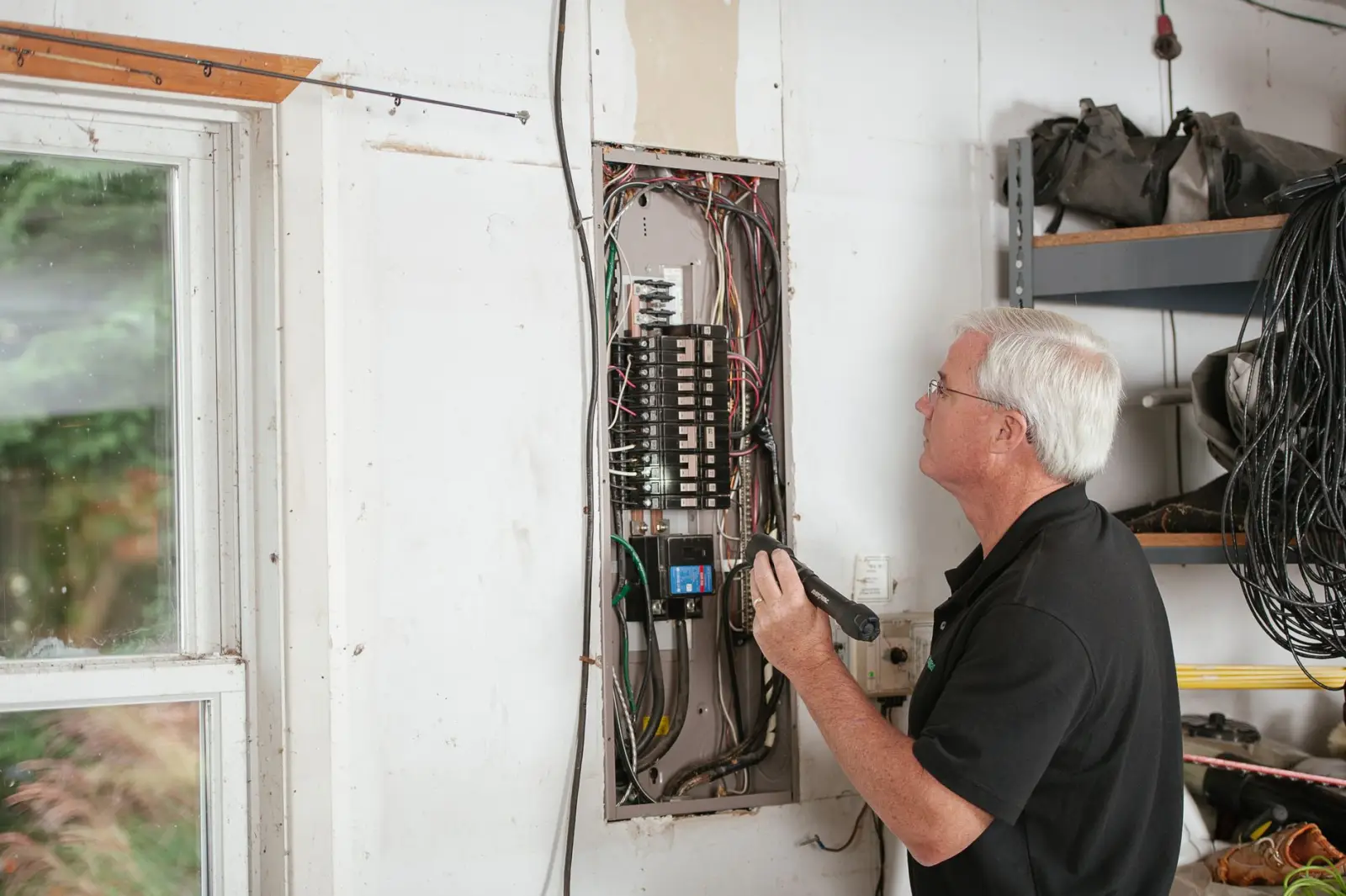
Homeowners rarely see what they are paying for, because most electrical work ends up behind a wall or a cover. Electrician video content fixes that with footage the crew captures on jobs already booked. The crowded old panel with double-tapped breakers and a hand-scrawled directory, then the new one with every circuit labeled. The conduit run from the panel along the garage wall to a freshly mounted charger. The transfer switch beside the panel and the generator pad outside. A two-prong outlet coming out of a plaster wall and a grounded one going in.
Your own electricians do the talking at the job: what was wrong, what they did and why. Scripts are short and written after we see the footage, so nobody is asked to stage a shot a real call cannot give. Finished work is filmed with the cover on, and nothing is framed as something a homeowner should try.
Electrician Social Media Marketing in the Neighborhood Thread
Plenty of residential electrical work is handed out in a local Facebook group, in the thread where someone just bought an electric car and asks who put in a neighbor's charger. Electrician social media marketing is aimed at being the name in those replies. That means posting the work people never see, like a labeled panel, a cleanly patched wall after a rewire, a chandelier hung in a two-story entry, or the old fuse box on the tailgate, and introducing the electricians who will be standing in the customer's basement.
It also means answering in the group without pitching: explaining why two charger quotes differ, or why a panel replacement takes most of a day with the power off. Electrician social media works best as a habit tied to the work, so we draft posts from photos the crew sends from jobs they were running anyway. We start on Facebook, where those threads live, and hold off on Instagram or anything else until someone in the shop wants to keep feeding it.
Project Stories and Newsletters for Quotes Still on the Fridge
A service upgrade or generator quote rarely gets signed on the spot. It waits for the new car to arrive, for the budget to free up, for the next storm to make the decision feel urgent. A few well-timed emails keep the electrician who wrote that quote in mind while the household decides, with no discount codes and no pressure. Homeowners who got a large quote and did not book receive a short series that answers the hesitation the electrician heard at the door: what the day of a panel swap looks like, how a transfer switch decides what stays on during an outage, a project story from a house of the same age.
Each project story follows one house: the flickering or the tripping that started it, the panel or wiring the electrician opened up, and the finished work, pictured only with the owner's permission. Past customers get notes tied to their own house, such as generator owners before storm season or households with an older panel that came up on a service call, written as useful information rather than company news.
An Editorial Calendar Built Around Storm Season and the Holidays
Residential electrical demand bunches up: generator interest before and after storm season, outdoor outlets and holiday lighting in late fall, tripping breakers in the first heat wave when fans and window units pile onto one bedroom circuit, chargers whenever a new model reaches local driveways. The busy weeks are the weeks nobody has time to film or approve anything, so production and publishing run in separate columns. The generator explainer and the outage-prep post are written and shot months ahead, with an electrician sitting for a short interview in a quiet week.
A few undated pieces, a charger guide or a rewiring story, sit in reserve for the weeks the schedule is full. Picking which homeowner questions earn a full page on the site is work we share with the people who plan the site's search pages.
Frequently Asked Questions
Should an electrician publish troubleshooting content for homeowners?
Yes, if it stays at what a homeowner can notice and report: which outlets are dead, when a breaker trips, whether a switch plate feels warm. It should never give steps for opening the panel or working on breakers, and it should say plainly that a burning smell, sparking or scorch marks mean calling an electrician, and that smoke or fire means calling 911.
What should an electrician show on camera after a panel upgrade?
The finished work with the cover on, the labeled circuit directory, and the old panel beside it if it was removed. The electrician who did the job explains what was wrong and what changed. House numbers, street signs and the customer stay out of frame unless the customer says yes.
How does an electrician get video content without slowing down jobs?
By filming the before, the finished work and a short explanation on calls already on the schedule, then sending the clips in. The scripts are written afterward around the footage, so no one has to stage a shot or hold up the crew.
From the Service Call to the Charger Guide

We Gather the Questions Asked at the Door
Your electricians note the questions homeowners asked that week about panels, chargers, generators and old wiring, and we interview you or a lead electrician on the best ones. Together we agree which troubleshooting topics are safe to publish and where each one stops.

We Write Around Your Crew's Footage
We turn panel swaps, charger installs and rewires your crew filmed into short scripts, write the blog guides and project stories, and draft social posts from job photos. Nothing is published until a licensed electrician on your team has checked it for accuracy.

We Publish Ahead of Storm Season
Generator and outage pieces go live before storm season, undated guides wait in reserve for the busiest weeks, and homeowners holding an unsigned upgrade or generator quote get a short follow-up series instead of company news.
What Your Electricians' Job Clips Become
Panel explainers
Blog guides for homeowners weighing an upgrade, charger or rewire
Job-site clips
Short scripts built on footage from calls already booked
Quote check-ins
Newsletter series for households holding an unsigned quote
Show Homeowners What Sits Behind the Panel Cover
Book a call and we'll outline your first panel upgrade guide, the job clips worth scripting, and the storm-season pieces to have ready before the outages start.

Let's talk about your growth
Tell us about your business and we'll show you exactly where AI can win you more customers.