


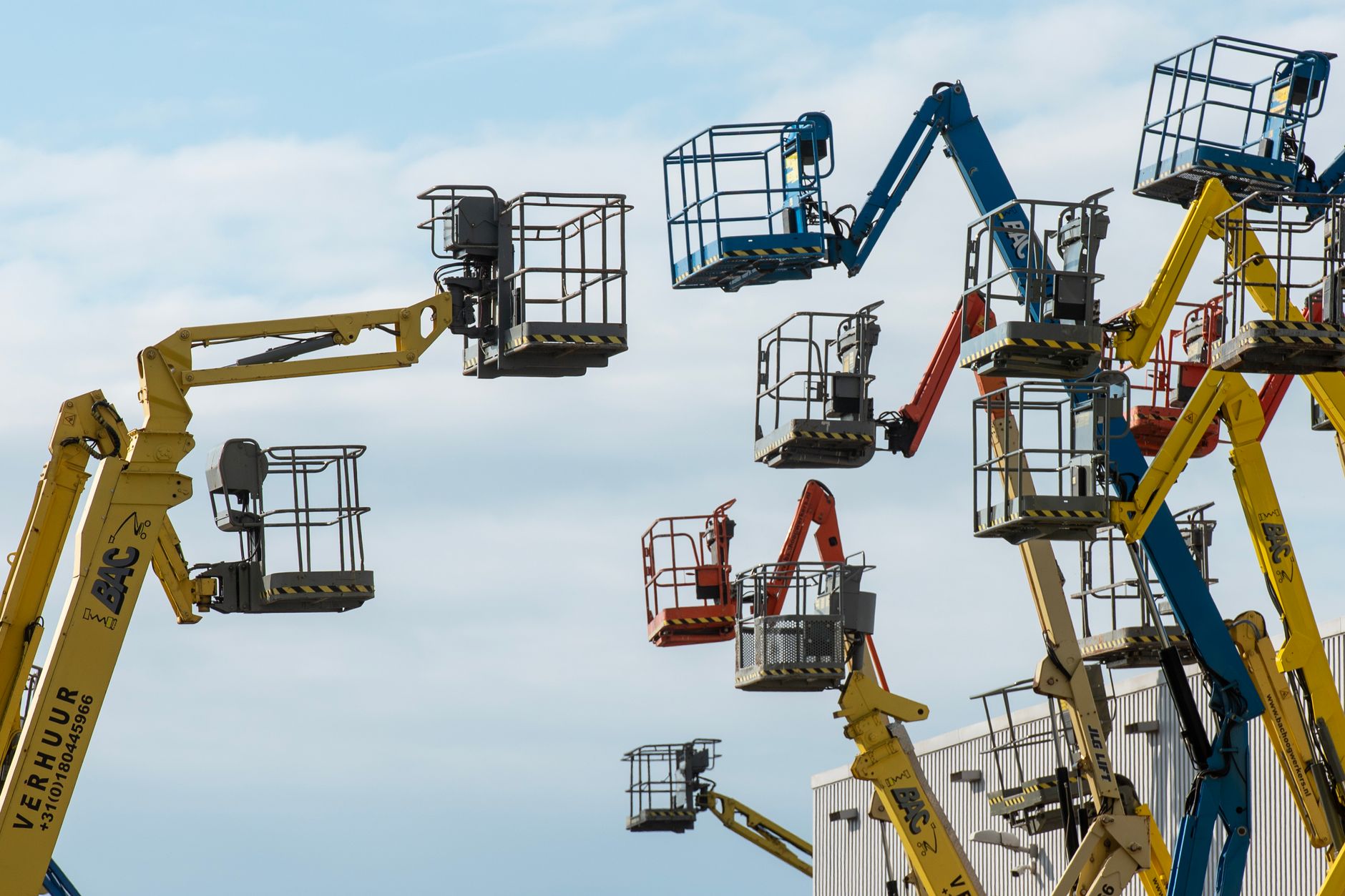
Web Design for Equipment Rental Companies
Website Design for Equipment Rental Companies is the core of what Qeystone does for equipment rental businesses. Need equipment rental website design company? You're in the right place. Your customers decide who to call before they ever pick up the phone — your website needs to show your fleet, pricing, and availability at a glance. Our Equipment Rental website design turns browsers into confirmed reservations, fast. From Equipment Rental Web Design to Best Websites for Equipment Rental Companies, we cover every angle.
The Site Is a Catalog and a Reservation Desk, Not a Brochure
An equipment rental website has almost nothing in common with the contractor sites it gets built next to. A plumber or an electrician sells labor, and their site sells the crew, the reviews, and the callback. A rental yard sells access to a fleet — a specific excavator, scissor lift, or trencher, in stock, for a window of days the customer already has circled on a calendar. That makes the site far closer to an e-commerce store with a reservation desk bolted on than to a service page. The product is inventory: browsable by equipment type and size, filtered by what is available on the dates that matter, priced by the day, the week, and the month, and reserved before somebody else takes the last unit. A rental catalog with real specs, real photos, and real rates is the entire job. A site that leads with a phone number and a stock photo of a hard hat is asking a contractor whose job starts Monday to gamble that the machine will be there — and he will not gamble when a national chain will confirm it for him online in ninety seconds.
What Web Design for a Rental Company Actually Involves
The work breaks into pieces that reinforce each other. Equipment category pages give excavators, forklifts, scaffolding, and aerial lifts the spec sheets and rate tables each class needs. Conversion work is aimed at the reservation, not at raw form fills, because a submitted quote request on the wrong dates is a dead lead. Core Web Vitals work keeps a catalog of hundreds of SKUs, each with photos and spec data, fast enough to browse. Mobile-first design serves the operator standing in the mud checking whether a machine is free for Thursday. A local business website ties the fleet to a delivery radius and a physical yard, and a catalog-first redesign is the way out of a brochure site that only ever says call for availability.
Rates Have to Be Legible Because the Customer Is Doing Math
A contractor pricing a rental is running a rent-versus-buy calculation and a duration calculation at the same time, and the website either helps or gets skipped. Publish the structure plainly: daily rate, weekly rate, and monthly rate, with the compression visible rather than hidden. A standard machine that rents around $100 to $150 a day settles near ten times that for a week and roughly ten to twelve times for a month, so the weekly rate is three to four times the daily and the monthly buys far more time per dollar. A backhoe near $200 a day, scaffolding at $15 to $40 a day, a trencher from $125 to $300 — the visitor wants those bands on the page, next to the delivery fee of $3 to $5 per mile that decides whether renting from you beats renting from the yard ten miles closer. Hiding the numbers does not create a phone call; it sends the visitor to United Rentals, which shows them. On a rental catalog, a rate the customer can read is the first conversion, long before any reservation.
Availability Is the Conversion Mechanism
A rental is worthless if the unit is not there for the window it is needed. That single fact reorders the whole site. The most valuable thing a rental site can do is answer the availability question fast — either by showing near-real-time stock against a chosen date range, or by making a reservation request quick enough that a human confirms within the hour rather than the next business day. A contractor with a crew idling on Monday morning does not wait for a callback; he books whoever confirms first. Designing for that means the date picker, the availability signal, and the reserve action live at the top of every equipment page, not buried behind a generic contact form that treats a $2,000 monthly rental like a request for a coupon.
Two Audiences Share One Site
The IA has to serve two very different people without alienating either. The pro account — a contractor or a builder who rents every week — wants speed above all: saved equipment, account billing terms, a standing delivery address, and the ability to re-book last month's order in two taps. The one-time DIY renter wants the opposite: guidance on which machine the job actually needs, what the deposit is, whether a license or training is required, and reassurance that a stump grinder is not going to end the weekend in the emergency room. A single hero and a single call to action cannot hold both. The catalog has to let the pro dive straight to a SKU while giving the DIY renter a guided path by project — dig a trench, lift a load, reach a second story — that lands on the right equipment category with the deposit and operating notes already answered.
Delivery, Radius, and the Yard Are First-Class Content
Unlike a labor trade, a rental company has to physically move a heavy machine to the customer and get it back. That logistics reality is not fine print; it is a major part of what the site sells. Service area, delivery radius, delivery and mileage fees, pickup windows, and the yard's own location and hours all belong in structured, findable content because they change whether a rental is even feasible. A machine that cannot reach the site by Monday is not available in any sense the customer cares about. Treating delivery as a first-class page — with the radius drawn, the per-mile fee stated, and the cutoff times for next-day drop-off spelled out — removes the biggest silent objection a rental site carries.
Frequently Asked Questions
How is an equipment rental website different from a contractor website?
A contractor site sells labor and books a callback; an equipment rental website sells access to a fleet and has to work like a store with a reservation desk. It needs a browsable catalog by equipment type and size, daily, weekly, and monthly rates with the compression shown, an availability signal against real dates, and delivery-radius detail — none of which a service-quote site is built to carry.
Should rental rates be published on the website?
Yes. The customer is doing rent-versus-buy and duration math, and a rate they can read is what keeps them from clicking straight to a national chain that shows theirs. Publish daily, weekly, and monthly bands plus the $3 to $5 per-mile delivery fee. A number on the page reads as confidence; hiding it reads as a reason to shop elsewhere.
Related Reading
The reservation moment is worked out in conversion optimization for rental reservations, and the per-class spec-and-rate architecture is detailed in equipment category page design. For a neighboring business whose website also has to manage physical stock rather than sell a single job, see how local retail shops present inventory online.
From Blueprint to Bookings

We Learn Your Fleet and Market
We start by digging into your rental inventory, your service area, and the customers you actually want to win — whether that's contractors renting skid steers or event planners booking tents and tables. No generic templates. Every decision is built around how equipment rental customers search and buy.

We Build a Site That Works Like a Rental Counter
Using AI-powered website design for Equipment Rental businesses, we create fast, mobile-first sites with clear equipment categories, quote request forms, and availability signals that push customers toward action. Your site handles the heavy lifting so your team doesn't have to.

You Launch, We Optimize
After launch, we track what's driving calls, form fills, and reservations — then we keep improving. Equipment rental is seasonal and competitive, and your website should get sharper every month, not collect dust.
Real Results for Rental Businesses
3x
More quote requests within 90 days of launch
68%
Of rental customers book on mobile — we build for that first
40%
Reduction in repetitive phone inquiries thanks to clear online info
How We Grow Equipment Rental With Equipment Rental Website Design Company
Local Business Website
A fast, modern site built to win local customers.
Landing Page Design
Focused pages built to turn clicks into leads.
Core Web Vitals Optimization
Faster load times that please users and Google.
Conversion Rate Optimization
Turn more of your existing traffic into customers.
Website Redesign
Modernize an outdated site into a lead machine.
Mobile-First Design
Flawless on every phone, where most customers visit.
Let's Build Your Rental Business a Real Website
Tell us about your fleet and we'll show you exactly what a high-converting Equipment Rental website looks like for your market.

Let's talk about your growth
Tell us about your business and we'll show you exactly where AI can win you more customers.