


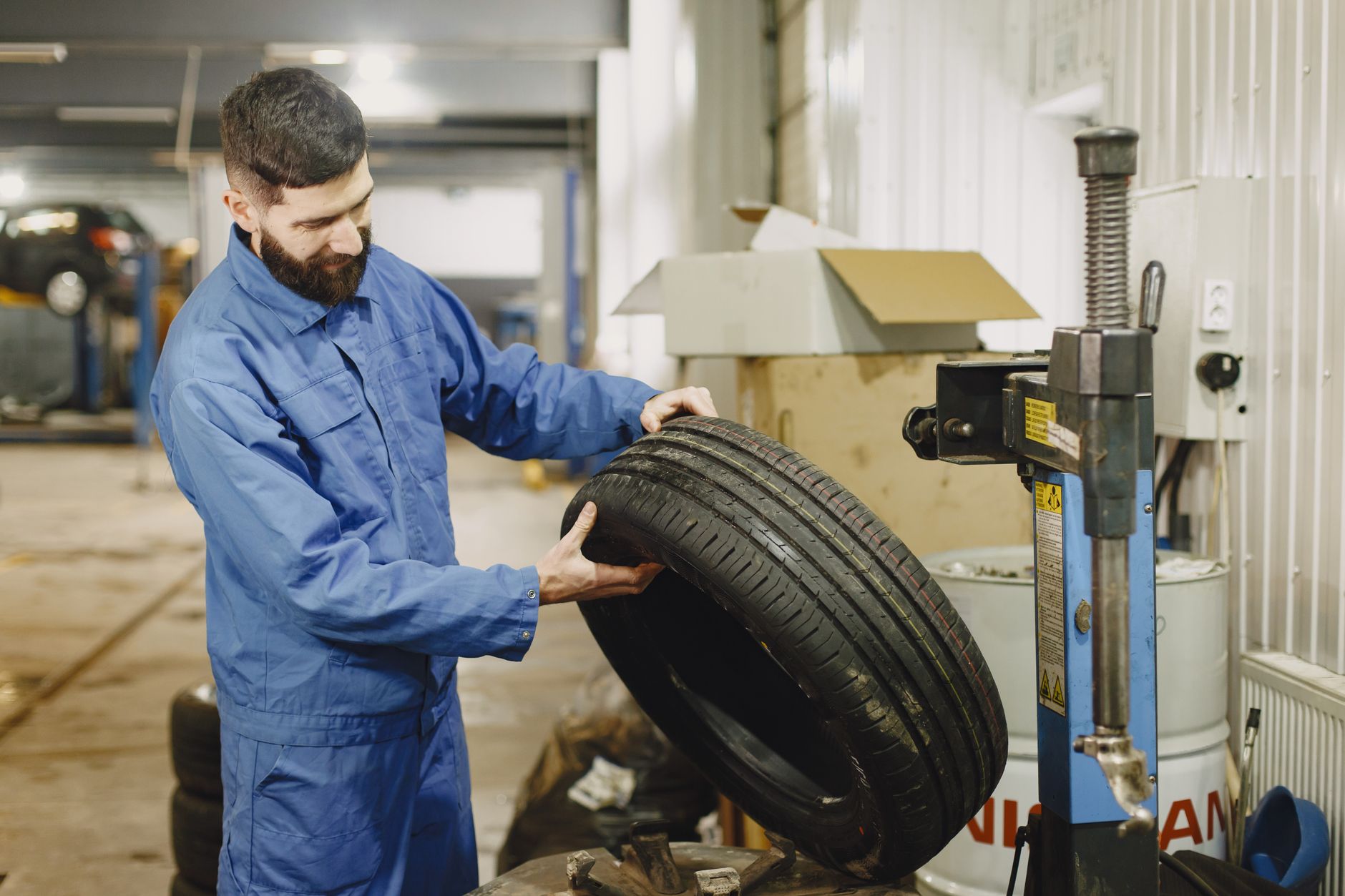
Tire Shop Website Design
Website Design for Tire Shops is what Qeystone does best, helping tire shops businesses grow every month. Searching for tire shop website design company? Qeystone has you covered. Your tire shop deserves more than a forgettable website — it needs one that turns local searchers into booked appointments. Our Tire Shops website design is built to showcase your services, build trust fast, and keep your bays full. From Tire Shop Web Design to Best Websites for Tire Shops, we cover every angle.
Half Catalog, Half Booking System — and That Split Is the Whole Design Problem
A tire shop sells a product and it sells a service, in the same transaction, to the same person, in the same fifteen-minute window of their attention. Nothing else on this list of trades does that. A plumber sells labor. A detailer sells a result. A tire shop sells a physical object with a SKU, a manufacturer, a load rating and a published street price — and then it sells the bay time, the balancing, the valve stems, the TPMS reset and the alignment that turn the object into a working car.
So the site has to be two things that pull against each other. It has to behave like e-commerce: a real product finder, a catalog with stock levels, prices that move, fitment data, filters. And it has to behave like a service business: appointment slots, technicians, a shop that closes at six and can only handle so many cars a day. Most tire shop website builds fail because someone picked one half and pretended the other did not exist. The catalog-only build sells four tires to a customer with no way to get them installed on Saturday. The service-only build — a phone number, a photo of the shop, six words about family ownership — sells nothing at all, because the customer wanted to know what a 225/65R17 costs and left to find out somewhere it was written down.
Every design decision on a tire shop website descends from that split. The navigation, the URL structure, the page templates, the performance budget, the schema, the analytics — all of it is downstream of the fact that this business is a small local store bolted to a parts catalog with thousands of line items in it.
The Size Box Is the Front Door, and It Needs Two Doors
There are exactly two kinds of visitor, and they arrive knowing different things. The first read the sidewall in a parking lot and has 225/65R17 typed into their notes app. The second knows only that they drive a 2019 Highlander and has never once looked at a tire sidewall in their life. Both are ready to buy. Both need a path, and both paths have to sit on the homepage, above the fold, side by side.
The size path is three fields — width, aspect ratio, diameter — and it must not punish someone who types the size as a single string, because that is how people copy it out of a photo. The vehicle path is year, make, model, trim, and the trim step is where most builds quietly break, because a Highlander XLE and a Highlander Limited leave the factory on different wheels. Getting trim wrong means showing someone a tire that will not fit their car, which is worse than showing them nothing.
Ten seconds is the honest budget. That is roughly how long a person will fight a lookup tool before they open a new tab and let Tire Rack do it for them. A tire shop website that answers what fits my car and what does it cost in one screen keeps the sale local. One that answers it with call for a quote has forfeited the sale to whoever put a number on the page, and no amount of visual polish compensates.
You Have to Show the Price, Because the Customer Already Knows It
In a bespoke trade, withholding price is defensible — the job genuinely has not been scoped. A tire is a commodity with a name, and the customer can look up what that exact name costs from four national sellers before you finish reading this sentence. Concealment is not leverage here. It is a tell.
The real numbers are not embarrassing, and publishing them is the whole trick. A full set of four, installed, runs roughly $400 to $900 on a sedan; $700 to $1,200 on an SUV; $900 to $1,500 and up on a truck; and $1,800 to $3,000 or beyond on performance and luxury fitments where the tire itself is exotic. Install-and-align adds $150 to $400 on top of the tires. Those spans are wide because the product range is wide, and a visitor reading them learns something useful rather than nothing.
The job of the site is not to hide the number. It is to make the honest number look better than the dishonest one. An online seller's price is the tire, in a box, on a truck. Yours is the tire, mounted, balanced, with new valve stems, TPMS sensors reset, the old carcasses disposed of, road hazard coverage attached and the alignment checked. Put those line items on the screen, priced, and let the customer add up both columns themselves. The out-the-door total is the only number that decides anything, and the shop that shows it first is usually the shop that gets the car.
The Margin Lives in the Attach, So the Site Has to Sell It
Tires are sold close to the bone. The money is in what goes with them, and every one of those items is a genuine service the customer benefits from — which makes this the rare upsell that a website can argue for honestly and at length.
Wheel alignment is the headline. A 2-wheel alignment runs $50 to $100; a 4-wheel alignment runs $100 to $200, with most shops landing between $75 and $175. On a vehicle carrying driver-assistance cameras and radar, the alignment triggers an ADAS recalibration that can push the ticket to $300 to $700 or more. Lifetime alignment packages typically sell for $180 to $250 and pay for themselves on the second visit. Alongside that sit balancing, TPMS service, valve stems, tire disposal and road hazard warranty.
Here is the paragraph that earns its keep on a tire shop website, and it is worth writing carefully: skipping the alignment after fitting new tires can cut their life roughly in half. Misalignment chews through tread 10 to 30 percent faster, and a set that should have gone 60,000 miles goes 30,000 instead. Declining a $150 wheel alignment to protect $900 of new rubber is a bad trade, and it is a bad trade that thousands of people make every day because nobody explained it to them in writing before they got to the counter. That explanation belongs in the cart, next to the checkbox, not buried three clicks deep on a services page nobody visits.
The inverse deserves saying too, because it buys credibility that the upsell then spends. An alignment advertised under $50 or $60 is usually a toe-and-go: the technician sets toe, skips camber and caster, and sends the car out. A shop that publishes what a real four-wheel alignment includes — toe, camber and caster, all four corners, with a printed before-and-after — has drawn a line that a customer can actually use to judge the competition.
The Catalog Is a Technical Burden No Other Local Trade Carries
A thousand tires, each fitting dozens of vehicles, each with a stock level and a price that changes when the manufacturer runs a rebate. Filters for brand, season, run-flat, load range, speed rating, mileage warranty. That is not a brochure site with a few extra pages. That is e-commerce, and it brings e-commerce's problems into a business that has one location and four bays.
Faceted navigation spawns a near-infinite crawlable URL space. Duplicate content appears the moment the same tire is reachable by size, by vehicle, by brand and by promotion. Crawl budget gets spent on filter combinations nobody searches for while the pages that actually convert go unindexed. Price and stock data arriving from a supplier feed after first paint shove the layout around and wreck the Core Web Vitals scores that a purely local competitor passes without trying. None of this is exotic — it is standard retail technical work — but it is entirely absent from the toolkit most agencies bring to a local service trade, which is why so many tire shop sites are either a fast brochure with no catalog or a slow catalog nobody can book on.
What Tire Shop Website Design Actually Involves
Six disciplines carry the work, and each one bends around the catalog-plus-booking split rather than around a generic local-services template. Conversion rate optimization treats the size-and-vehicle lookup as the primary conversion mechanism and rebuilds the path from sidewall to booked bay time around it. Core Web Vitals optimization handles the retail-scale problems — faceted URLs, feed-driven prices, image-heavy result grids — that a catalog drags into a local site. Landing page design builds the pages the catalog cannot: the alignment page, the ADAS recalibration page, the free alignment check, the winter changeover. A local business website answers the two questions the national sellers cannot — is it in stock here and can you fit me in today. Mobile-first design is built for someone crouched by a wheel well, phone in one hand, reading numbers off rubber. And a website redesign is what happens when a shop outgrows the canned template its distributor gave it and has to migrate a live catalog without losing the rankings the old URLs carried.
Frequently Asked Questions
Should a tire shop publish its prices online?
Yes, and there is very little argument on the other side. Tires are a commodity with a model name, and any customer can price the identical SKU at four national retailers in under a minute. Withholding the number does not create a phone call; it creates a bounce. What a shop should publish is the installed, out-the-door total — tires, mounting, balancing, valve stems, TPMS reset, disposal, road hazard and the alignment — because that total is the honest comparison against a boxed tire shipped to a door, and it is the comparison the local shop wins.
Why does the website need to talk about alignment so much?
Because it is the single most consequential thing a tire customer can get wrong, and because it is where the shop's margin lives. Misalignment wears tread 10 to 30 percent faster and can halve the useful life of a new set. A 4-wheel alignment is $100 to $200; the tires it protects are $400 to $1,500. A tire shop website that explains that trade in plain arithmetic, at the point of purchase, is not upselling — it is preventing a customer from throwing away half of what they just bought.
Related Reading
The lookup tool is where the money is won or lost, and it is built out in conversion rate optimization for tire shops, while the pages that sell the alignment and defuse the ADAS bill live in landing page design. For a useful comparison, look at how local retail shops build their websites. They face the same brutal fact — a customer standing in front of the product with a cheaper price already on their phone — but a retailer's answer is to sell the shop, the staff and the object itself. A tire shop's answer is different: the tire is the same tire, and what you are actually selling is everything that happens to it after the box is opened.
From Blueprint to Booked Bays

We Learn Your Shop
We dig into your tire brands, service offerings, and local competition so your site speaks directly to drivers in your market — not some generic auto shop template.

We Build With AI Precision
Our AI-powered website design for Tire Shops accelerates the build without cutting corners — delivering fast-loading pages, mobile-first layouts, and persuasive service pages that rank and convert.

You Launch and Fill the Calendar
Go live with a site that drives real calls, appointment requests, and walk-ins — then watch your online presence work as hard as your team does.
Real Results for Tire Shop Owners
3x
More inbound appointment requests within 90 days of launch
68%
Of tire shop customers research online before visiting — your site needs to win them
2 Weeks
Average time from kickoff to a live, conversion-ready tire shop website
How We Grow Tire Shops With Tire Shop Website Design Company
Local Business Website
A fast, modern site built to win local customers.
Landing Page Design
Focused pages built to turn clicks into leads.
Core Web Vitals Optimization
Faster load times that please users and Google.
Conversion Rate Optimization
Turn more of your existing traffic into customers.
Website Redesign
Modernize an outdated site into a lead machine.
Mobile-First Design
Flawless on every phone, where most customers visit.
Ready to Fill More Bays Every Week?
Let's build a website that works as hard as your shop does — get your free strategy call today.

Let's talk about your growth
Tell us about your business and we'll show you exactly where AI can win you more customers.