


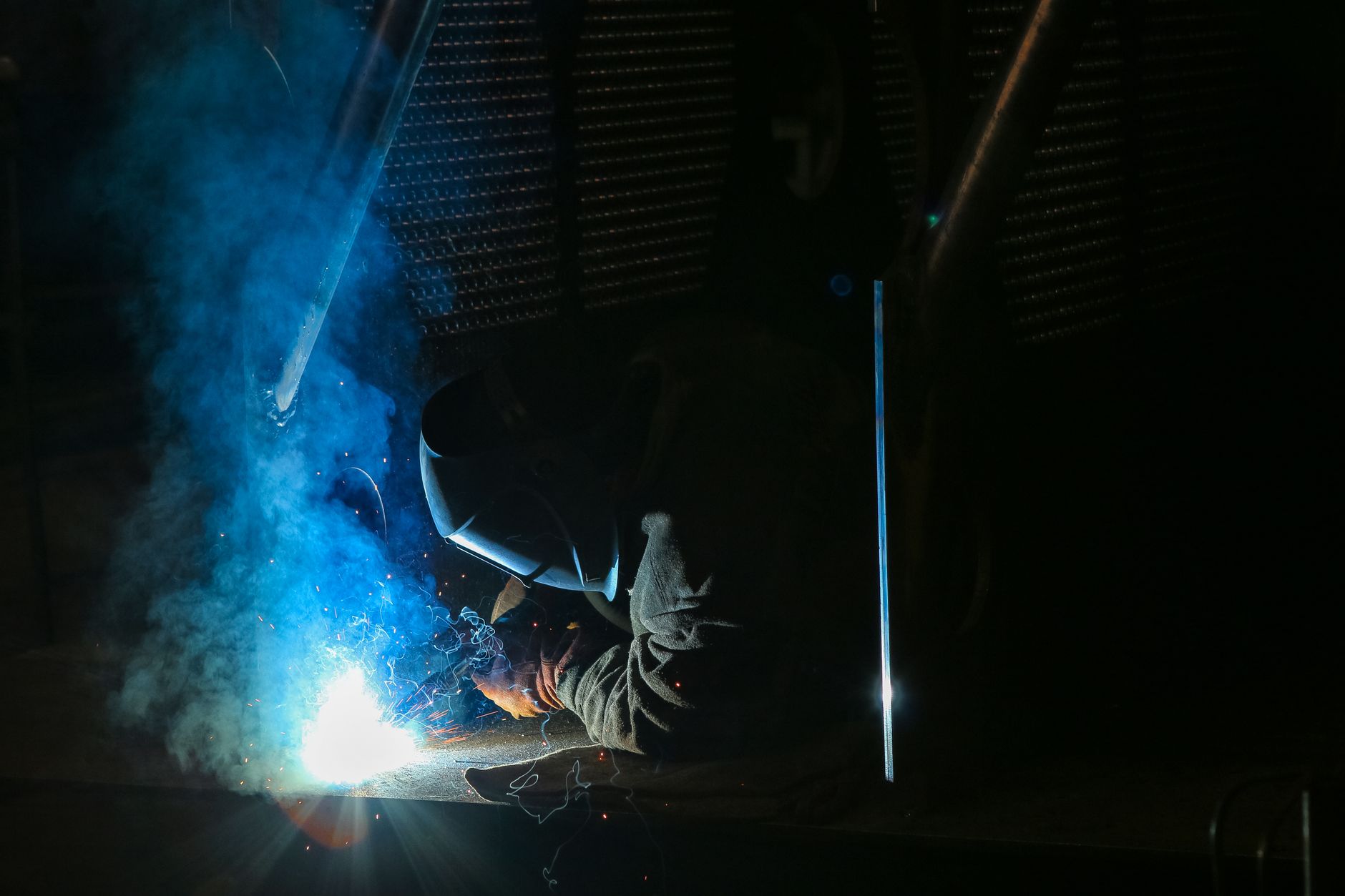
Website Design for Welding and Metal Fabrication Shops: The Portfolio Sells Before the Quote Form Does
Website Design for Welders done right is exactly what Qeystone delivers for welding businesses. Welding Website Design Company is part of how we make that happen. Most welding shops lose leads to competitors with a stronger online presence — professional welding website design changes that fast. Our AI-powered website design for Welding businesses turns your craft into a client-generating machine. From Welding Web Design to Best Websites for Welders, we cover every angle.
The Product Is Visual, So the Site Leads With Proof
The buyer of a decorative gate or a stair railing is not reading a services list; they are scrolling photographs and asking one question — did the hand that made these make something I would be proud to bolt to my own house. That single fact reorders everything about a welding shop website. In most trades the site describes work the customer cannot see until it is finished, so the copy carries the sale. In fabrication the customer can see the finished bead, the miter, the powder-coated finish, the way a picket meets a rail, and they decide on the image long before they read a word. A site that opens with a wall of stock spark photos and a paragraph about "quality craftsmanship" is selling nothing, because the prospect wants to see the actual gates and railings this shop has actually built. The economics reward getting this right: a typical home job lands near $500, but a stair railing runs $550 to $750, decorative gates $1,200 to $2,800, and a shop that photographs those jobs well converts the high-value decorative buyer who chooses almost entirely on portfolio.
One Site, Three Very Different Buyers
A welding shop website does not serve one customer; it serves a spectrum, and the site has to hold all three without confusing any of them. The decorative buyer wants a gate, a railing, or a custom piece and converts on the portfolio — show them finished work and a way to send a photo of what they want. The mobile-repair buyer has a cracked trailer frame or a broken bracket, a $120 to $900 job, and converts on speed: a service radius, a stated minimum service fee, and a mobile travel charge of $25 to $100 shown plainly so nobody feels ambushed. The certified and structural buyer — a general contractor or an industrial client awarding a pipe or structural package — converts on credentials: a Certified Welding Inspector on staff or on call at $30 to $45 an hour, qualified procedures, and project references their own inspector will accept. The same navigation has to route a homeowner to a gallery and a GC to a credentials page without either feeling they landed on the wrong site.
What Welding Web Design Actually Includes
The category pulls several disciplines together, each aimed at a different weak point in the shop's current site. Project-type landing pages give gates and railings, custom fabrication, mobile repair, and structural or pipe work the separate pages their very different intents demand. Conversion optimization tightens the path from a portfolio browse to a submitted quote. Mobile-first design serves the reality that most decorative and repair buyers are thumbing through your work on a phone. Core Web Vitals work keeps a photo-heavy site fast enough that the galleries load before the visitor leaves. A local business website anchors the whole thing to a real service area and project structure, and a planned website redesign is the route out when the current site is dated or has almost no work on it to show.
The Quote Request Is the Conversion, Not a Booking
The single most important design decision on a fabrication site is what you ask the visitor to do, and here the answer is almost never "book a time" and almost never "request a proposal." It is a quote request, ideally one that lets the buyer attach a photo of the rusted gate or a rough sketch of the railing they want, plus dimensions. A homeowner who can upload a picture of the existing porch and type "about twelve linear feet" gives the shop enough to quote and gives themselves the feeling that they have been understood. That upload path is worth more than any contact form, because welding is priced on specifics — linear foot and per-inch pricing, material, finish, whether the job is shop or mobile — and a form that captures those specifics turns a vague inquiry into a quotable lead. The site should also set expectations honestly: state the minimum service fee, note that mobile work carries a travel charge, and explain that bringing a small item into the shop avoids that fee. Buyers who understand the pricing model before they submit send better leads and argue less later.
Certified Work Needs Its Own Proof, Separate From the Gallery
The credential buyer and the decorative buyer do not read the same page. A homeowner shopping a railing does not care about a welding procedure specification and will not read it; an industrial buyer or a general contractor will not call without seeing it. So the certified side of the site — structural, pressure, and pipe welding to code — gets its own architecture built on evidence: named certifications, the inspector arrangement, the codes the shop welds to, and a project reference list of comparable jobs. This is where a custom fabrication gallery of decorative gates is exactly the wrong proof; the GC wants to see a beam-to-column connection or a pipe spool that passed inspection, not an ornamental fence. Keeping the two worlds on separate pages lets each buyer see the one kind of proof that moves them, and stops a $2,800 gate portfolio from quietly undercutting a five-figure structural bid.
Image Weight Is a Real Constraint, Not an Afterthought
A portfolio-led site is, by definition, a heavy site. Dozens of high-resolution photos of gates, railings, and fabrication are the whole selling proposition, and they are also the thing most likely to make the site slow, especially on the phone where most of this browsing happens. That tension — the more work you show, the slower the page gets — is the defining engineering problem of welding web design, and it is why lazy loading, responsive image sizing, and a fast hero gallery are not luxuries but the difference between a portfolio that sells and one that stalls. A custom fabrication gallery that takes six seconds to appear is a gallery the buyer never sees. Every leaf under this hub, from the redesign work down to the Core Web Vitals tuning, is built around the same idea: the photographs are the product, and the site's job is to deliver them fast, in order, and in a form that ends in a quote.
Related Reading
The quote-funnel argument is worked out in full on our page about optimizing a welding shop's quote request path, and the per-project page structure is covered under landing pages built by project type. Because ornamental gates, fences, and railing work put a fabricator in front of many of the same buyers as a gate installer, the gallery-and-quote logic here maps closely onto how fencing and gate companies structure their websites.
Your New Site, Built Fast

We Learn Your Shop
We dig into your welding services — whether that's structural fab, custom metalwork, mobile welding, or all three — so your site speaks directly to the customers you actually want.

We Build and Launch
Our team designs a conversion-focused site with project galleries, service pages, and quote request forms built specifically for welding businesses — no generic templates, no filler copy.

You Start Getting Calls
Your site goes live optimized for local search, fast load times, and mobile — so contractors, fabricators, and homeowners in your area can find you and reach out immediately.
Real Results for Welding Shops
3x
More quote requests in the first 90 days
68%
Of visitors come from mobile — your site is ready
14 Days
Average time from kickoff to live site
How We Grow Welding With Welding Website Design Company
Local Business Website
A fast, modern site built to win local customers.
Landing Page Design
Focused pages built to turn clicks into leads.
Core Web Vitals Optimization
Faster load times that please users and Google.
Conversion Rate Optimization
Turn more of your existing traffic into customers.
Website Redesign
Modernize an outdated site into a lead machine.
Mobile-First Design
Flawless on every phone, where most customers visit.
Ready to Weld More Deals Online?
Get a free site audit and see exactly what's costing your welding business leads right now.

Let's talk about your growth
Tell us about your business and we'll show you exactly where AI can win you more customers.