


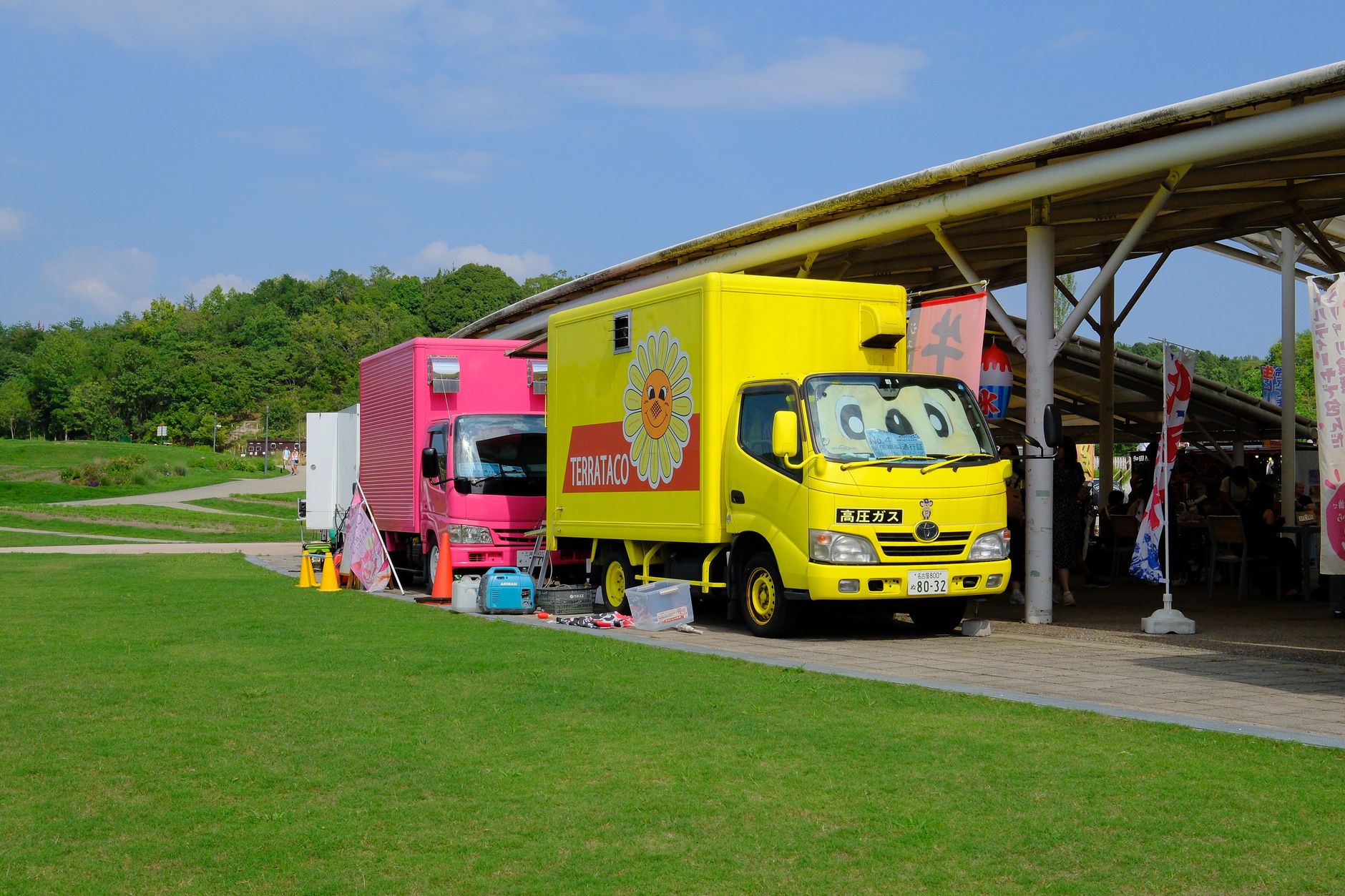
Website Design for Food Trucks
Website Design for Food Trucks is what Qeystone does best, helping food trucks businesses grow every month. Searching for food truck website design company? Qeystone has you covered. Your food truck deserves a Food Trucks website design that works as hard as you do — turning hungry browsers into loyal customers before you even open the window. We build sites that show off your menu, broadcast your location, and convert visitors into fans. From Food Truck Web Design to Best Websites for Food Trucks, we cover every angle.
A Site Built Around One Question: Where Are You Today?
A food truck website has a job no restaurant site does — answer 'where are you right now?' before anything else. Food truck website design starts from that reality: a live, front-and-center schedule, a catering booking form for the high-margin events, and a menu, all built to load instantly on the phone of someone deciding whether to walk over. Everything secondary — the story, the gallery — comes after the two things a visitor actually came for: the food truck schedule and booking.
The Live Schedule Is the Homepage
For a moving business, the schedule isn't a subpage — it's the center of gravity, so the food truck schedule and booking essentials sit above the fold where a returning customer finds today's stop in a glance. A schedule rendered as real, crawlable text rather than a buried social embed serves both the customer and search engines, turning the site into the reliable source of truth about where the truck is, which is exactly what keeps regulars coming back to check it instead of guessing.
The Catering Page That Pays the Bills
The site's most valuable page is the catering page, because catering runs 50 to 60 percent margins against 10 to 20 percent on street stops, so a dedicated catering landing page that answers headcount, menu, and booking, with a clear inquiry form, does the heavy revenue lifting. A truck that treats catering as a footnote on the homepage leaks the exact bookings that separate a $150,000 operation from a $400,000 one, so the catering page earns real space and real attention.
Mobile-First Isn't Optional
Nearly every visit to a truck's site is a phone in a hungry hand, so mobile-first design is the baseline, not an enhancement. A site designed phone-first — thumb-friendly, fast, with the schedule and order links reachable in a tap — converts the walk-up decision, while a desktop-oriented layout squeezed onto a phone loses the exact customer standing a block away trying to decide. For a food truck, the mobile experience essentially is the website.
Fast Enough for a Right-Now Decision
When someone's deciding where to eat this minute, a slow site loses them before it loads, so speed is a conversion feature, not a technical nicety. Trimming the heavy hero videos and uncompressed photos that drag a truck site to a crawl, and building for a realistic phone connection, keeps the visitor from bouncing to a competitor, because the fastest path to the schedule and the order button is often what decides whether a hungry searcher becomes a customer at the window.
Driving Owned Ordering, Not Third-Party Commissions
Every order that runs through a third-party platform costs a truck a painful cut, so a smart site pushes owned, first-party ordering and direct contact wherever possible. Making the truck's own order and contact paths the easiest option on the site keeps more of each sale, which matters enormously on food-service margins, and turns the website into a quiet defense of the truck's economics against the platforms steadily eroding them.
The Menu as Real Text, Not a PDF
A menu saved as a PDF or an image is invisible to search and awkward on a phone, so the site presents it as real HTML text — item names, descriptions, dietary notes. Building the menu as crawlable content lets the truck rank for the cuisine searches people actually use and gives a mobile visitor a menu they can read without pinching and zooming, which is both an SEO win and a basic courtesy to the hungry person trying to decide.
Social Proof Where It Convinces
A truck's reviews and event photos belong on the site, especially the catering page, where a planner's biggest fear is that the truck won't deliver. Integrating testimonials and real event imagery on the pages where people decide turns the site into a persuasion tool, not just an information one, so the proof the truck earned out in the world does its work at the exact moment a visitor is weighing whether to book or walk over.
Connecting the Site to the Booking Machine
The site's catering form is the front door to the whole booking pipeline, so it feeds directly into the truck's CRM and follow-up rather than dumping into an inbox. Wiring the site into the booking machinery means an inquiry submitted at midnight is acknowledged and scoped automatically, closing the gap between a curious visitor and a captured lead, and making the website the true starting point of the corporate-catering pipeline instead of a dead-end brochure.
A Site That Keeps Up With a Moving Business
A truck's schedule, menu, and service area shift constantly, so the site is built to be easy for the owner to update, or automated to stay current on its own. Designing for easy maintenance means the schedule never goes stale and the menu never lies, because a site that's hard to update quietly rots into wrong information, which for a business defined by 'where are you today' is worse than having no site at all.
How Website Design Ties the Whole System Together
The website is where every other effort lands — SEO drives traffic to it, ads point at it, social links to it, and the booking pipeline starts on it — so the food truck website design shapes whether all that upstream work actually converts. Treating the site as the hub the entire marketing system flows through, rather than an afterthought, is what turns a truck's scattered channels into a coherent machine that reliably produces walk-up traffic and catering bookings.
Frequently Asked Questions
What's the most important part of a food truck website?
The live, front-and-center schedule answering 'where are you today?', paired with a strong catering booking page. Those two things — findability and bookings — are what a truck's site exists to deliver, on a fast, mobile-first build.
Should a food truck's menu be a PDF?
No — a PDF or image menu is invisible to search and awkward on a phone. Build the menu as real HTML text so it ranks for cuisine searches and reads easily on mobile, where nearly all the traffic is.
Related Reading
A fast, mobile-first build is the foundation covered in core web vitals optimization, and the site only converts once it's findable through local SEO and Google Maps. Restaurants build their sites around the same escape-the-commissions, owned-ordering priority — their restaurant website design work goes deeper on first-party ordering.
From Curb Appeal to Clicks

We Learn Your Truck Inside Out
We dig into your brand, your menu, your regular stops, and your crowd. Whether you're slinging tacos at farmers markets or parked outside office parks every lunch hour, we build your site around how your business actually operates.

We Build It Fast and Smart
Using AI-powered website design for Food Trucks businesses, we move quickly without cutting corners. Your site gets a mobile-first layout, real-time location integration, an eye-catching menu display, and online ordering or catering inquiry forms that actually convert.

You Launch, We Keep It Running
Go live with a site built to grow. We handle updates, performance, and SEO so you can focus on the food. When you add new menu items or change your schedule, your site keeps up.
Results Food Truck Owners See
3x
More catering inquiries within 60 days of launch
80%
Of customers check a food truck's site before showing up
2 Weeks
Average time from kickoff to a live, conversion-ready site
How We Grow Food Trucks With Food Truck Website Design Company
Local Business Website
A fast, modern site built to win local customers.
Landing Page Design
Focused pages built to turn clicks into leads.
Core Web Vitals Optimization
Faster load times that please users and Google.
Conversion Rate Optimization
Turn more of your existing traffic into customers.
Website Redesign
Modernize an outdated site into a lead machine.
Mobile-First Design
Flawless on every phone, where most customers visit.
Ready to Park More Customers?
Let's build a website that fills your line, books your events, and grows your food truck business — starting today.

Let's talk about your growth
Tell us about your business and we'll show you exactly where AI can win you more customers.