


HVAC Advertising That Follows the Forecast and the Dispatch Board
HVAC advertising earns its money on the call that comes in minutes after a system quits, and wastes it on the call nobody can take. Qeystone runs Google Ads, Local Services Ads, Meta and YouTube for residential heating and cooling contractors, with emergency, replacement and tune-up campaigns kept apart, spend moved ahead of the forecast and every paid call tracked to the job it booked.
One Search Box, Three Different HVAC Buyers
HVAC advertising goes wrong when it treats every heating and cooling search as the same customer. Three people type into Google on a hot afternoon. One has a house that stopped cooling an hour ago and will book whoever answers first. One has been told the old system is on its last season and is collecting quotes. One wants the spring tune-up done before the weather turns. Each is worth something different to the shop and decides on a different clock.
So we never run them through one campaign. The no-cool and no-heat calls get their own campaigns, built for a phone call within minutes. Replacement gets its own, built for an in-home estimate request and a decision that can take weeks. Tune-ups and maintenance plans get their own, built for a booking the shop can schedule into a slow week. Each has its own budget, bids, ad copy and landing page, so a cheap tune-up click never borrows money meant for a system sale.
HVAC PPC Paced to the Forecast and the Dispatch Board
Heating and cooling demand is set by the weather, and the weather does not follow the calendar. The first properly hot stretch of the year and the first cold night both arrive as a flood of breakdown calls, and the shop that has budget live the day before catches far more of them than the one that raises bids once the phones are already ringing elsewhere. We watch the local forecast and move cooling and heating spend ahead of the turn, not after it.
The other half of HVAC PPC pacing is the one most accounts ignore: the shop can only run so many calls. On the worst day of a heat wave every technician is booked, and buying more emergency clicks just pays for callers who will hear that the earliest slot is days away. When the board is full, we pull emergency bids back and lean on replacement and maintenance campaigns, which fill the calendar further out.
Google Ads for HVAC: Heating, Cooling and Heat Pumps Kept Apart
Google Ads for HVAC starts with keyword groups that match how homeowners describe the problem: AC not cooling, furnace not igniting, heat pump blowing cold air, strange noise from the outdoor unit, no heat overnight. Repair phrasing and replacement phrasing go in separate campaigns because they deserve different bids and different pages. Heat pump terms need their own group, since the same equipment sells in both seasons and its searches shift from cooling problems in summer to heating problems in winter. Fuel matters too: in a market split between gas furnaces, oil and electric heat, the account bids only on the systems the shop actually services.
The negative list does as much work as the keyword list. Heating and cooling searches attract a long tail of clicks that never turn into a truck roll: car AC recharge, window and portable units, refrigerator repair, filter sizes, thermostat manuals, DIY repair videos, parts buyers, HVAC school and technician job searches. Commercial rooftop and chiller terms are blocked as well, so a residential shop is not paying for a building manager's search. We read the search terms report every week and keep adding to it.
Local Services Ads for HVAC Run Beside Search
Local Services Ads for HVAC can appear prominently in Google search results and charge for valid leads rather than clicks, which can put them in front of many homeowners the moment the system quits. They run beside search campaigns, not instead of them, so the shop can appear twice for the searches it wants most.
Most of the work is setup and upkeep. We choose only the job types the shop wants to sell, so a contractor that does not clean ducts or service boilers is not shown for them, and draw the service area around the neighborhoods the trucks can reach in a reasonable drive. Hours deserve care: a profile marked open overnight will ring overnight, so it should only say that if someone will answer. Then we review every lead and flag the ones that weren't real HVAC work, such as calls about car air conditioning, appliance repair or a business outside the area. We also tighten the profile's job types and areas so the same mistake does not repeat.
HVAC Social Media Ads Sell the Tune-Up Before the Breakdown
Nobody scrolls Facebook to find out why the furnace will not light; they search. HVAC social media ads do a different job. They reach homeowners in the service area before anything has failed, with a seasonal reason to book: the air conditioning check before the first heat, the furnace check before the first frost, the maintenance plan that keeps the household on the shop's list.
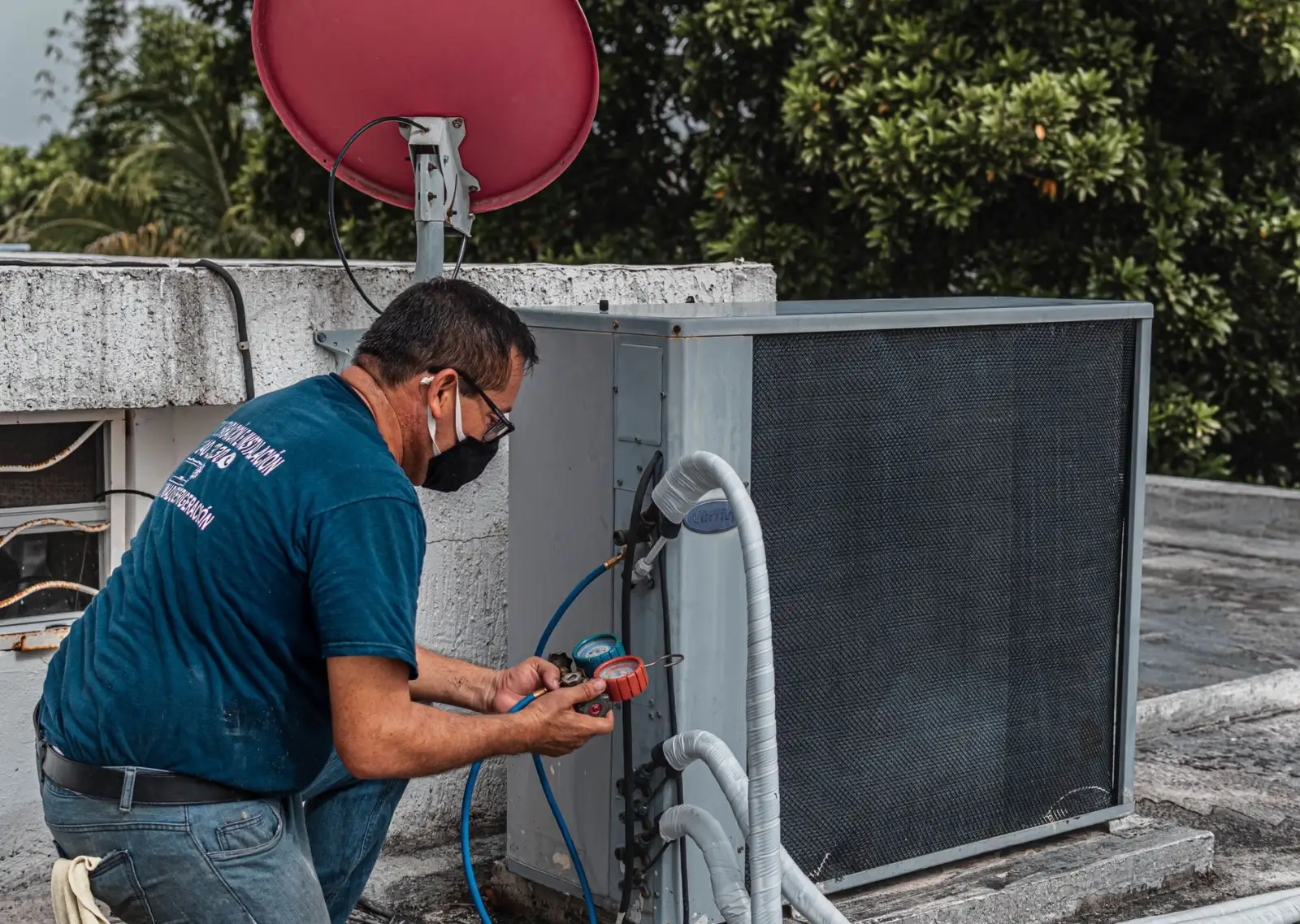
The creative is the shop's own people and trucks. A technician in uniform at a real condenser, a clean install in a real basement, an owner explaining what a maintenance visit actually checks. Homeowners are deciding who to let into the house, and a familiar face from a local van earns more trust than any stock photo. We also build a separate set for the replacement buyer: neighborhoods where systems are reaching the end of their life, with copy that explains the repair-or-replace decision without inventing savings figures.
YouTube and Retargeting for the Long Replacement Decision
A replacement buyer rarely books from the first ad; they compare brands and collect quotes. YouTube is where we show them what the shop is like before the estimate: a short walk-through of install day, a comfort advisor explaining how a system is sized for the house, an honest look at the difference between a furnace and a heat pump for that climate. The targeting is local homeowners already watching heating and cooling content.
Retargeting follows the same split as the rest of the account. Someone who visited the no-heat page and called does not need another ad. Someone who read the replacement page and left gets a sequence over the following weeks: the install video, reviews from customers who replaced a system, financing if the shop offers it, then a plain invitation to book the estimate. Current maintenance plan members are excluded from tune-up offers, so the shop never pays to sell a visit someone has already bought.
Every Paid Click Lands on Its Own Page and Every Call Is Tracked
HVAC PPC marketing breaks most often at the landing page. A no-cool ad that drops the homeowner on a home page full of menus loses the caller who wanted a phone number and a yes. So each campaign gets a matching page: the no-heat ad goes to a no-heat page with the number, the hours and the towns served at the top; the replacement ad goes to a page built around booking an in-home estimate; the tune-up ad goes to the seasonal offer and a booking form.
Every campaign also gets its own tracking number, so each call is tied to the ad, keyword and season that produced it. Calls are tagged by outcome: repair booked, estimate set, system sold, maintenance plan signed, price shopper, wrong service. That shows which searches turn into work, not which ones simply ring. Once the call is logged, the team that works unsold estimates picks it up from there.
Frequently Asked Questions
Should an HVAC company keep running emergency ads when every technician is booked?
Not at full strength. Emergency clicks during a fully booked heat wave or cold snap mostly reach callers who will hear that the next slot is days away, and many of them hang up and call the next shop. We pull emergency bids back when the board is full and shift that money to replacement and maintenance campaigns, which fill the schedule later in the week or the month.
Is it worth paying for HVAC ads in the spring and fall?
Yes, but with different campaigns. Breakdown searches slow in the shoulder months, so emergency budgets come down while tune-up and maintenance plan campaigns go up. That keeps crews working between peaks and builds a list of households who already know the shop when their system fails in the next heat or cold.
Why do HVAC ads need a long negative keyword list?
Heating and cooling searches overlap with a lot of searches that will never become a service call, such as car air conditioning, window units, appliance repair, parts, DIY videos, HVAC school and technician jobs. Without negatives the account pays for those clicks.
From the Forecast to a Booked Service Call

Split Cooling, Heating and Replacement
We pull your call history and job mix by season, then build separate campaigns for no-cool, no-heat, replacement and tune-up work. Each gets its own budget, keywords, negatives, ad copy and landing page, and Local Services Ads cover only the job types you sell.

Set Weather and Capacity Triggers
Cooling and heating budgets are set to move ahead of the first hot stretch and the first cold night. We agree with you how a full dispatch board is flagged, so emergency bids come down when the trucks are booked and replacement and maintenance spend picks up.

Tag Every Paid Call by Outcome
Every campaign carries its own tracking number. Calls are tagged as repair booked, estimate set, system sold, maintenance plan signed or wrong service, so the report shows which campaigns book work, not just rings.
Built Into Every HVAC Ad Account
Heat and cold
Cooling and heating campaigns with their own budgets and pages
Dispatch-aware
Emergency bids pulled back when every technician is booked
Every call
A tracking number per campaign, tagged by the job it booked
Want HVAC Ads That Know What the Weather Is Doing?
Book a call and we will map your service area, your heating and cooling job mix and how many calls your crews can run on a hot week before any budget goes live.

Let's talk about your growth
Tell us about your business and we'll show you exactly where AI can win you more customers.