


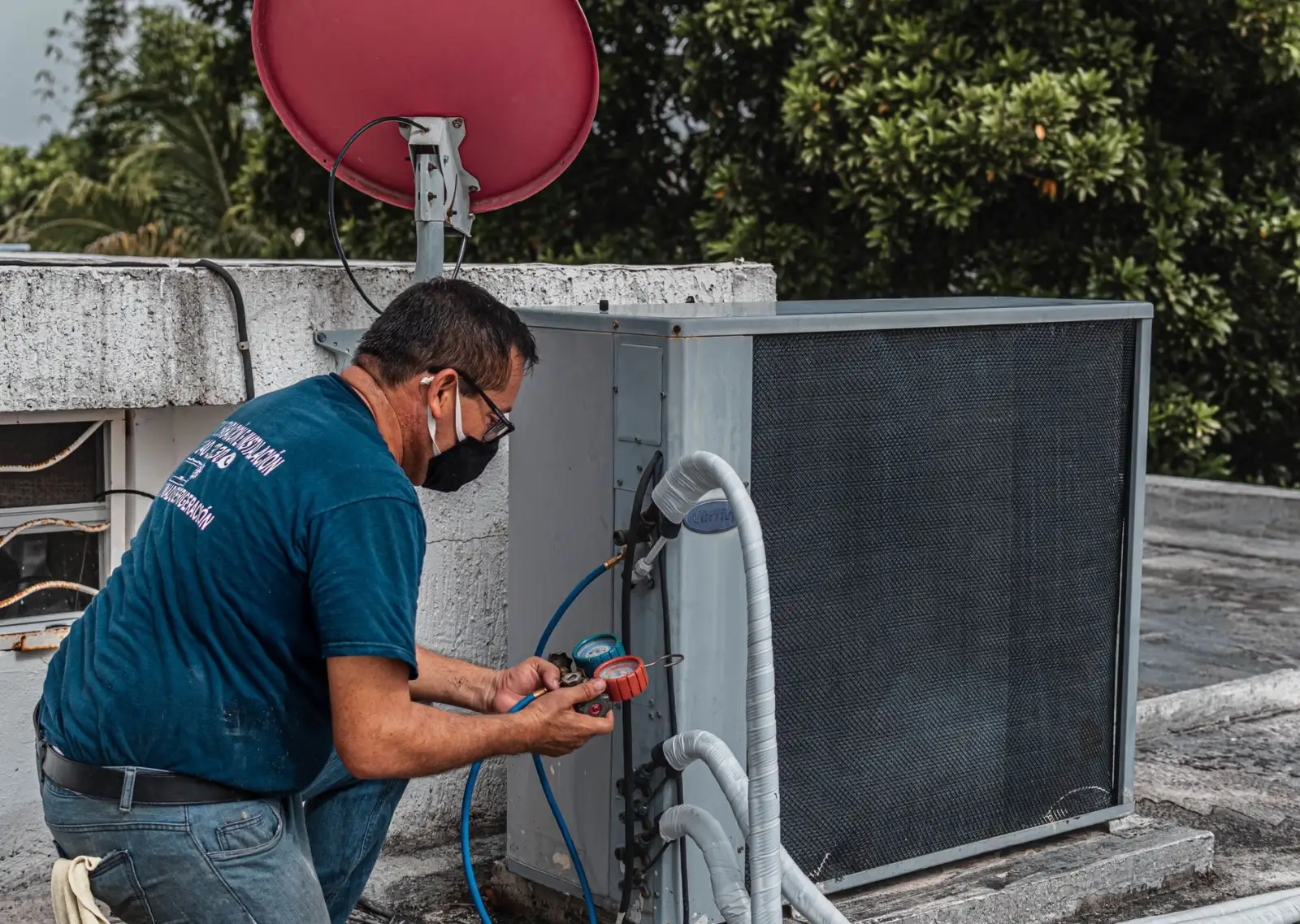
HVAC SEO That Holds Your Rankings Through Heat Waves and Cold Snaps
HVAC SEO for residential heating and cooling contractors whose calls follow the weather. We set up your Business Profile for house calls, build a page for each system and each job, write city pages around the homes in each town, clear expired specials and copied catalog pages out of the index, and make your answers the ones assistants quote.
HVAC SEO Has to Win Two Seasons, Not One
HVAC SEO serves a business whose phone follows the thermometer. In the heat, homeowners search for AC repair, a unit that freezes up, or a condenser that hums and will not start. In the cold, the same streets search for no heat, a furnace that short-cycles, or a heat pump that seems stuck in defrost. The shoulder months bring replacement research for a system that limped through last season.
Each set peaks when the weather turns, and a page published on the first hot weekend is still waiting to be crawled while the calls go to whoever was already there. So the work runs ahead of the calendar. Cooling pages get checked, fixed and linked while furnaces are still running, and heating pages get the same attention in late summer. Our part is the ranking side of that: the Business Profile, the page architecture, indexing, citations and the sources assistants pull from.
Local SEO for HVAC Starts With a Profile Built for House Calls
The technician goes to the house, not the other way round, so the profile is set up around a service area made of the towns your vans actually reach.
Start with the primary category. For most residential shops it is HVAC contractor, with secondaries such as air conditioning contractor, heating contractor or furnace repair service chosen to match work you really do, not every option the list offers. The services list then names each system on its own line: central air, gas furnaces, heat pumps, ductless mini-splits, boilers, indoor air quality.
Photos should be your installs: a new condenser level on its pad, a furnace with tidy venting, a mini-split head on a bedroom wall, a lettered van in a driveway. Hours need honesty. If you take no-heat calls overnight, the profile should say so; if you do not, it should not.
HVAC Google Maps ranking also leans on how far the searcher is from your business, and Google says there is no way to request or pay for a better local ranking. Suburbs at the far edge of the service area are reached through the site, with a page for each, rather than through the profile.
City Pages That Follow the Housing Stock
A city page is worth indexing in this trade because heating and cooling genuinely change from one town to the next. An older town built before central air may be full of houses with radiators and no ductwork, so the conversation there is ductless, small-duct high-velocity systems and boiler service. A township past the end of the gas main heats with propane, oil or heat pumps. A subdivision built all at once may have builder-grade equipment wearing out on the same few streets in the same couple of years.
Each page says what is true in that place: the systems common there, the jobs you have done there, the neighborhoods you cover and the technician who usually runs the calls. We build the outline from your job records, and a town where you have barely worked waits until the records give it something to stand on.
Heating and Cooling SEO Needs a Page for Each System and Each Job
Repair and replacement are different searches made by different people. The homeowner whose AC is blowing warm air wants someone today. The one weighing a heat pump against a new furnace and air conditioner will read for weeks. Heating and cooling SEO gives each its own page: AC repair, AC replacement, furnace repair, furnace replacement, heat pump installation and repair, ductless mini-splits, boiler service, indoor air quality, and a no-heat emergency page that is already indexed when the first cold night arrives.
Heat pumps are the structural problem. They heat and cool, so they belong in both menus, and many sites end up with two near-identical heat pump pages competing with each other. We give heat pumps a branch of their own and link it from both sides. The repair-or-replace question also gets a single page, linked from every repair page, because that is where a repair call turns into a replacement estimate.
Crawl and Indexing Problems Specific to HVAC Sites
Three problems turn up on HVAC sites again and again. The first is the seasonal special: a new tune-up offer page every spring and fall, left live after it expires or deleted without a redirect, until the site is full of dead offers and broken links. One offers page at a permanent address, updated in place, keeps its history. The second is the imported catalog. Some dealer site packages pull in model pages from the manufacturer by the hundred, with copy that appears word for word on every other dealer's site. Those pages soak up crawl attention and add nothing, so most belong out of the index, and the equipment you actually install gets described on your own pages. The third is the matrix: a page for every service in every town, generated from one template, flooding the index with thin URLs that look alike.
We also confirm that every system and city page is in the sitemap and actually indexed in Search Console, that the business is marked up as an HVACBusiness with its service area, that service pages carry Service markup, and that pages load quickly on a phone, because the person searching is often standing in a hot upstairs bedroom. If the site needs rebuilding rather than repair, that goes to the people who build the site itself.
AI Search for HVAC Draws on Pages That Answer the Symptom
Homeowners now ask assistants what they used to ask a dispatcher: why the furnace is blowing cold air, why there is ice on the copper line by the outdoor unit, whether a rattling condenser is worth fixing. AI search for HVAC tends to cite pages that answer one question directly under a heading that matches it, name an author with field experience, and say plainly which checks a homeowner can make (the thermostat mode, the filter, the breaker or furnace switch) and when to stop and call. A page that only says to call for expert service gives the assistant nothing to quote.
Those answers also have to agree with everything else written about the business. Assistants assemble a recommendation from many sources: your site's service list, your profile categories, your listing in an equipment manufacturer's dealer locator if you hold one, a trade association directory, and listings such as Bing Places, Apple Business Connect and Yelp. If one says you install boilers and the rest never mention them, the model has less reason to name you for boiler work. We bring the name, phone and service list into line across those listings and claim the dealer and association entries that are missing.
HVAC Company SEO Reported by Season and by Job
A traffic total misleads an HVAC owner in both directions. A mild summer can make the program look like it is failing,. So the monthly report compares each month with the same month last year, notes the weather behind it, and separates repair calls, replacement estimate requests and maintenance sign-ups that came from organic search and the map listing.
Rankings are tracked by job type and by town, so you can see whether furnace replacement is moving in the suburbs you want rather than staring at an average. HVAC company SEO is judged in the end on replacement estimates from search, because that is the work most owners want more of.
Frequently Asked Questions
Should heat pumps sit under heating or cooling on an HVAC site?
Neither on its own. Give heat pumps their own section, link it from both the heating and cooling menus, and keep one page per heat pump job instead of a copy in each menu, so the pages do not compete with each other.
Can an HVAC contractor show up in Google Maps for suburbs far from the shop?
Sometimes, but distance is one of the three things Google says local ranking is mainly based on, and there is no way to pay around it. Outlying suburbs are usually reached through the regular search results, with a page for each town that describes the systems and jobs you handle there.
Should every seasonal tune-up special get its own page?
No. Keep one offers page at a permanent address and update it each season. Separate pages for each promotion expire, break links and pile up as thin pages in the index.
Three Stages, Timed Around the Next Season

We Audit Before the Season Turns
We review your profile categories, services and hours, check which system and city pages exist and whether they are indexed, look for expired specials and imported catalog pages, and see how assistants answer no-heat and no-cool questions in your area.

We Restructure Pages and Listings
We set the service area and categories, split pages by system and by repair or replacement, give heat pumps their own branch, outline city pages from your job records, clean up the index, add HVACBusiness and Service markup, and correct dealer and directory listings.

We Report by Season and Job Type
Each month you see rankings by job type and town, plus repair calls, replacement estimate requests and maintenance sign-ups from search and the map listing, compared with the same month last year and read against the weather that drove it.
What Goes Into the Search Work
System pages
AC, furnace, heat pump, ductless and boiler pages, each its own
Town by town
City pages built from the jobs you have done there
Both seasons
Rankings and calls read against last year's weather
Will Your No-Heat Page Rank Before the First Cold Night?
Ask for a review of your Business Profile, system and city pages, and index, and see which heating and cooling searches in your towns are going to someone else.

Let's talk about your growth
Tell us about your business and we'll show you exactly where AI can win you more customers.